What Landlords and Tenants Should Know About Lead Safety
Lead safety remains one of the most critical yet frequently misunderstood aspects of residential property management and tenant welfare. Despite widespread legislative bans enacted in the late 1970s prohibiting the sale of residential lead-based paint, millions of residential structures across the United States continue to harbor dangerous reservoirs of this toxic heavy metal. Whether housed within legacy plumbing conduits, architectural coatings, or surrounding soil deposits, lead presents an invisible, odorless hazard that demands rigorous vigilance. Developing an advanced understanding of environmental lead dynamics is not simply a matter of statutory compliance; it is a fundamental imperative for safeguarding human health and maintaining structural asset value. Organizations dedicated to environmental hazard mitigation, such as A Safe Tomorrow, consistently emphasize that proactive risk assessment is vastly superior to post-exposure remediation.
For both property owners and occupants, navigating the realities of legacy housing requires separating outdated assumptions from modern toxicological science. Managing environmental risks involves an intricate balance between architectural preservation, routine custodial maintenance, and strict adherence to regulatory standards. By exploring the biological implications of heavy metal exposure, the structural vectors through which contamination occurs, and empirical detection modalities, both parties can foster safer, compliant living spaces.
The Biological Toxicology of Environmental Lead
To appreciate why regulatory agencies enforce zero-tolerance metrics for environmental lead, one must understand how this element interacts with biological systems. Lead ($Pb$) serves no physiological function in the human body. Instead, it operates as a potent xenobiotic neurotoxin that mimics vital trace minerals—predominantly calcium, iron, and zinc—thereby hijacking vital cellular pathways. When ingested or inhaled, lead enters the bloodstream and rapidly binds to erythrocyte membranes before disseminating into soft tissue structures, including the kidneys, liver, and central nervous system.
According to clinical assessments synthesized by the World Health Organization, there is no known safe blood lead concentration ($BLL$) in humans. Even fractional, sub-clinical exposure levels are sufficient to disrupt synaptic plasticity, inhibit neurotransmitter release, and trigger neurodegenerative apoptotic cascades. In developing pediatric nervous systems, where the blood-brain barrier is fundamentally more permeable, lead exposure damages the prefrontal cortex, precipitating irreversible cognitive deficits, reduced intelligence quotients ($IQ$), and persistent impulse control dysregulation.
Over extended chronologies, absorbed lead is sequestered directly into the skeletal matrix, where it substitutes for calcium hydroxyapatite crystals. Under conditions of physiological stress, bone remodeling, pregnancy, or senescence, these skeletal deposits can mobilize back into systemic circulation, creating delayed or secondary poisoning events. Insights documented by MedlinePlus medical resources underline that systemic exposure triggers multi-organ pathology, including chronic nephropathy, hypertension, hematological disruptions through ferrochelatase inhibition, and adverse reproductive outcomes in adults.
Because lead behaves as a cumulative biological toxin, the trajectory of micro-exposures over months or years is devastating. Detailed evaluations regarding lead accumulation illustrate how particulate matter settled on floorboards, windowsills, or ambient dust reservoirs steadily contributes to an individual’s total biological burden without manifesting immediate clinical symptoms.
Primary Vectors of Contamination in Residential Housing
Understanding the pathways of residential lead transmission requires examining structural materials commonly installed prior to the federal consumer ban of 1978. In multi-family dwellings and vintage single-family homes, contamination rarely stems from untouched, stable substrates; rather, mechanical friction, deterioration, and corrosion unleash bioavailable particles into living areas.
1. Architectural Friction Surfaces and Deteriorating Coatings
The primary vector of domestic lead ingestion is not the consumption of macroscopic paint chips, but the inhalation and incidental hand-to-mouth ingestion of microscopic surface dust. Lead compounds, historically incorporated into paints for pigment opacity, durability, and moisture resistance, generate fine dust when applied to moving architectural elements. Double-hung wooden sash windows, door jambs, baseboards, and staircase treads continuously grind against neighboring surfaces. As these components rub together, they pulverize legacy paint layers into sub-micron dust particles that settle into carpet fibers, air ducts, and floor seams.
2. Potable Water Plumbing Infrastructure
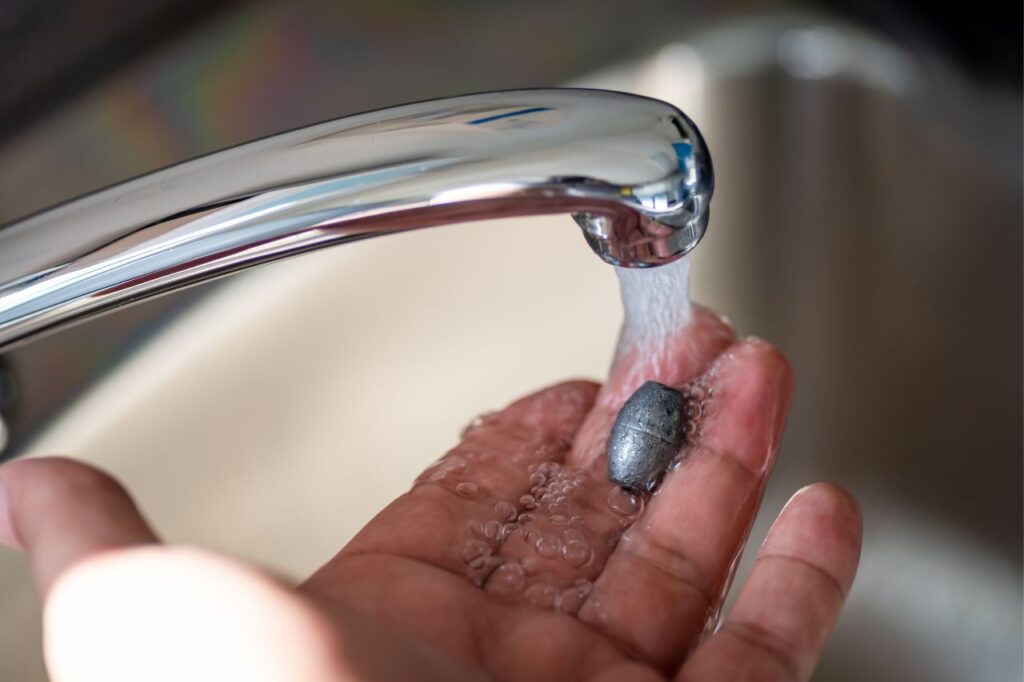
Plumbing systems represent an equally pervasive, subterranean threat. Up until the mid-1980s, municipal infrastructure and internal plumbing commonly utilized pure lead service lines, lead-bearing brass fixtures, and lead-tin solder formulations (typically 50% tin and 50% lead) to fuse copper pipe networks. When the municipal water chemistry shifts—specifically concerning dissolved oxygen levels, pH balance, and corrosion inhibitor saturation—passivating mineral crusts on pipe walls can destabilize. This chemical destabilization causes dissolved lead and particulate flaking to leach directly into the drinking water supply.
Identifying plumbing vulnerabilities requires targeted hydraulic assessment, especially in high-density regions featuring historical construction. Landlords and tenants scheduling professional municipal water testing in Brooklyn gain empirical clarity regarding whether dissolved contaminants originate from aging utility mains or internal property pipe runs, ensuring that diagnostic mitigation measures address the exact failure point.
3. Soil and Ambient Exterior Runoff
Exterior architectural components, including porch railings, eaves, and siding, frequently experience intense UV degradation and weather-induced chalking. Flaking exterior paint settles into the soil perimeter immediately surrounding the building foundation (the drip line). Furthermore, decades of leaded gasoline emissions prior to modern environmental phasing deposited substantial heavy metal concentrations into urban topsoils. When occupants, maintenance personnel, or pets walk across bare exterior ground, they continuously track contaminated particulate matter into the interior living envelope.
Legal Frameworks, Disclosure Mandates, and Infrastructure Standards
Navigating lead safety requires strict adherence to federal, state, and municipal statutory frameworks. At the federal level, the Residential Lead-Based Paint Hazard Reduction Act of 1992 (Title X) establishes rigorous disclosure mandates. Property owners leasing or selling residential property constructed prior to 1978 are legally obligated to provide prospective tenants with the official EPA-approved lead hazard information pamphlet, disclose any known lead-based paint or related hazards, and share records or inspection reports detailing prior environmental testing.
Beyond baseline disclosures, property owners face stringent operational protocols under the EPA’s Renovation, Repair, and Painting (RRP) Rule. Any renovation, maintenance, or repair project that disturbs more than six square feet of interior painted surfaces or twenty square feet of exterior surfaces in pre-1978 properties must be executed by EPA-certified lead-safe firms using lead-safe work practices. Failure to comply can expose property owners to severe civil liabilities, statutory fines reaching tens of thousands of dollars per violation, and significant tort claims if pediatric occupants sustain elevated blood lead levels.
Municipal jurisdictions often enforce standards that far exceed federal baseline metrics. For instance, cities with dense inventories of legacy housing have established explicit affirmative duties requiring property owners to conduct annual visual inspections for paint deterioration, maintain permanent logs, and utilize certified personnel for minor turnover painting and plaster repairs. Both landlords and tenants can review educational materials and statutory guidance by consulting environmental safety resources that delineate evolving city-specific mandates from baseline federal guidelines.
Empirical Testing and Diagnostic Methodologies
Visual inspection alone cannot definitively evaluate lead presence; scientific diagnostic methodologies are essential to quantify hazard levels accurately. Superficial assumptions that smoothly coated surfaces are non-hazardous often collapse under systematic empirical review.
X-Ray Fluorescence (XRF) Spectrum Analysis
The clinical gold standard for non-destructive lead paint inspection is portable X-Ray Fluorescence (XRF) spectroscopy. Operated by certified environmental testing technicians, handheld XRF analyzers emit controlled gamma or X-ray radiation that excites the inner-shell electrons of heavy metal atoms within paint coatings. As electrons transition between energy shells, they emit characteristic fluorescent X-rays. The analyzer calculates the elemental mass per unit area, providing instantaneous readouts expressed in milligrams of lead per square centimeter ($mg/cm^2$). Surfaces exceeding regulated thresholds (typically $1.0\ mg/cm^2$ or local standards as low as $0.5\ mg/cm^2$) are officially classified as containing lead-based paint, regardless of how many layers of modern latex paint cover the substrate.
Dust Wipe Sampling and Laboratory Analysis
To assess immediate biological exposure pathways, technicians utilize standardized dust wipe sampling protocols compliant with ASTM International standards. Calibrated, wet-wipe templates are drawn across measured sectors of floors, interior window sills, and window troughs. These samples are hermetically sealed and submitted to an accredited laboratory for Inductively Coupled Plasma Mass Spectrometry (ICP-MS) or Atomic Absorption Spectroscopy (AAS). By measuring airborne and settled micro-dust in micrograms per square foot ($\mu g/ft^2$), dust wipe analysis measures whether everyday living surfaces meet safe clearance standards.
Quantitative Potable Water Testing
Assessing plumbing systems requires a dual-tier water sampling regimen. A “first-draw” sample collects one liter of water taken directly from a kitchen faucet following an undisturbed stagnation period of at least six to eight hours. This evaluates metal leaching from the interior faucet, fixture internal fittings, and proximal soldered pipe joints. A subsequent “purged” or “flushed” sample, collected after several minutes of vigorous water flow, assesses the condition of the subterranean service lateral connecting the residence to the municipal main lines.
Collaborative Protective Protocols for Landlords and Tenants
Maintaining a lead-safe residential environment requires proactive operational protocols, regular communication, and mutual responsibility between rental property operators and leasing occupants.
Actionable Protocols for Property Owners
Landlords should implement an active operations and maintenance (O&M) program tailored to prevent coating degradation before it produces bioavailable dust:
- Implement Regular Moisture Control: Water infiltration from roof leaks, plumbing failures, or window condensation accelerates paint delamination and peeling. Swiftly resolving plumbing and envelope leaks prevents lead paint from crumbling into fine dust.
- Enforce Lead-Safe Turnover Standards: Utilize HEPA-filtered sanding tools and vacuum-assisted shaving equipment during tenant transitions. Dry scraping, open-flame burning, and uncontained mechanical sanding should be strictly prohibited.
- Maintain Intact Barrier Coatings: When full abatement (such as complete trim removal or chemical stripping) is cost-prohibitive, utilize specialized elastomeric encapsulation coatings formulated to seal legacy paint layers beneath durable, impenetrable barriers.
- Upgrade Friction Components: Replace legacy wooden sash windows with modern vinyl or aluminum replacements. Eliminating high-friction wood-on-wood movement permanently halts the continuous generation of concentrated lead dust within window wells.
Proactive Protective Protocols for Tenants
Tenants living in pre-1978 residences can execute simple, science-backed maintenance habits to minimize incidental biological exposure:
- Utilize Wet-Cleaning Methods: Never use dry brooms or conventional non-HEPA vacuums on unsealed floors or window trim, as traditional vacuums merely aerosolize sub-micron lead particles into the breathing zone. Instead, clean horizontal surfaces using wet microfiber mops and disposable electrostatic wipes saturated with specialized cleaning detergents.
- Practice Morning Water Flushing: If living in structures with suspected lead plumbing components, run tap water cold for one to two minutes before using it for drinking, infant formula preparation, or cooking. Always draw from the cold water tap, as hot water heaters accelerate metal leaching from internal pipe walls.
- Report Deterioration Promptly: Inspect window sills, baseboards, and radiator surfaces monthly. Notify building management in writing at the first sign of peeling, chipping, or cracking paint so containment repairs can occur before hazardous dust spreads.
- Establish High-Efficiency Entry Zones: Place durable walk-off mats at all exterior entryways and adopt a strict no-shoes policy inside the home to prevent tracking lead-contaminated soil particles into living areas.
When disputes, uncertainty, or suspected regulatory non-compliance emerge regarding structural risks, reaching out to specialized environmental liaisons and testing agencies provides a clear path forward. Both property managers seeking comprehensive abatement verification and tenants seeking clarification regarding their legal protections can contact professional consultants to coordinate on-site assessments and restore environmental safety.
Conclusion: Cultivating Long-Term Lead Safety
Eliminating residential lead hazards is an achievable operational standard that hinges on rigorous science, timely diagnostics, and proactive communication. Landlords who invest in empirical testing, lead-safe structural remediation, and routine maintenance protect their properties from devastating liabilities while preserving asset value. Simultaneously, informed tenants equipped with clear knowledge of contamination vectors can protect their families from irreversible biological harm. By replacing assumptions with professional diagnostics, stakeholders transform older residential housing from hazardous legacy environments into durable, compliant, and healthy homes.