Understanding the Threat of Aging Water Infrastructure
Across municipalities and older residential corridors throughout North America, millions of gallons of treated water travel every day through a subterranean maze constructed decades—sometimes even over a century—ago. While municipal treatment plants typically produce water that meets strict federal quality benchmarks, the physical network responsible for delivering that water directly into residential sinks, bathtubs, and appliances frequently compromises its purity. Water systems degrade silently, and the public health risks associated with obsolete plumbing remain among the most persistent civil infrastructure challenges of the modern era.
When clean water leaves a treatment facility, it enters trunk lines, water mains, utility-owned service lines, privately owned service lines, and internal household plumbing. The critical breakdown occurs at the nexus where public utility responsibilities transition to private property lines. Decades of deferred maintenance, combined with evolving chemical water compositions, have accelerated the structural breakdown of subsurface pipes, releasing toxic heavy metals directly into consumption streams. To navigate these risks effectively, property owners must understand the scientific mechanics of infrastructure failure, the bodily hazards involved, and the empirical testing protocols designed to safeguard drinking water supplies.
The Structural Pipeline: How Aging Infrastructure Delivers Lead to the Tap
To assess why tap water becomes contaminated, one must examine the specific components that constitute historical water delivery networks. Municipal networks are multi-tiered systems composed of various alloys and materials introduced during different technological eras. Understanding where lead hides in plumbing requires tracing the path of water from the public street directly into the home.
Lead Service Lines (LSLs)
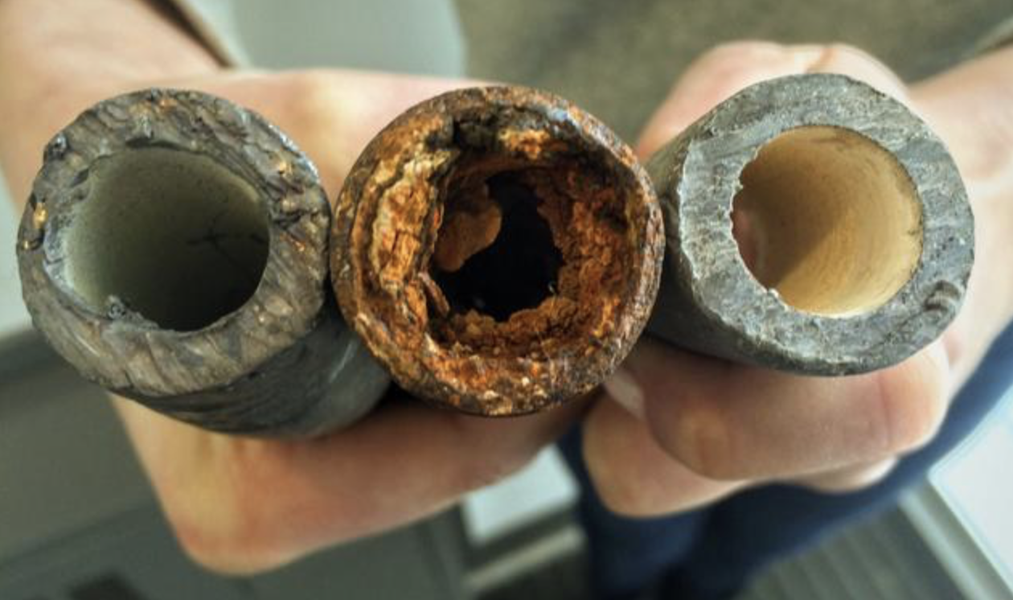
The primary vector of municipal lead contamination is the lead service line (LSL). An LSL is the small-diameter pipe that connects the large municipal water main beneath the street to the interior plumbing of an individual home or building. Throughout the late 19th century and extending into the mid-20th century, lead was the material of choice for civil engineers due to its durability, low cost, and exceptional malleability, which made it easy to bend around existing underground obstacles. In many older regions, these pipes remain active decades past their intended operational lifespan, leaching microscopic particulate and dissolved metal into standing water.
Brass Fixtures, Chrome Plating, and Galvanized Iron
Contamination is rarely isolated to the service line alone. Inside the residence, older plumbing systems present multiple secondary sources of toxic discharge. Until regulatory revisions were implemented under the Safe Drinking Water Act in 1986 and strengthened in 2014, plumbing components sold as “lead-free” brass fixtures could legally contain up to 8 percent lead by weight. Modern standards restrict wetted surfaces to no more than 0.25 percent lead, but millions of pre-2014 faucets and valves remain in service today.
Furthermore, galvanized steel or iron pipes installed during the mid-20th century create an insidious secondary reservoir. Galvanized pipes are dipped in zinc coatings that historically contained trace quantities of lead. Over decades of service, the interior walls of galvanized lines corrode, developing deep rust blisters that trap dislodged lead particles originating upstream from an LSL. Long after an exterior lead service line is replaced, these internal corroded pipes can continuously shed accumulated heavy metals into tap water whenever water pressure fluctuates.
Lead Soldered Copper Joints
Copper piping became standard in residential construction following World War II, offering superior structural longevity. However, prior to the national ban enacted in 1986, plumbing contractors routinely assembled copper lines using 50/50 tin-lead solder. When acidic or chemically imbalanced water passes over these solder seams, an electrochemical reaction called galvanic corrosion occurs between the copper and the softer lead solder, causing rapid dissolution of toxic elements directly into the household drinking supply.
Chemical Mechanisms of Corrosion and Leaching
Lead does not typically dissolve into water on its own; rather, complex aqueous chemistry governs whether pipe walls remain stable or actively shed metallic toxins. Municipal utilities rely on precise water chemistry adjustments to maintain a protective mineral scale—primarily insoluble lead carbonate or lead phosphate compounds—along the inner walls of aging pipes. This barrier prevents bare metal from contacting flowing water.
When treatment plants alter their raw water sources, adjust disinfection agents, or experience fluctuations in pH, oxidation-reduction potential (ORP), and dissolved inorganic carbon (DIC), this protective mineral passivation layer can destabilize. A drop in water pH increases acidity, dissolving mineral crusts and exposing bare pipe walls. Similarly, switching from free chlorine disinfection to chloramines can shift water chemistry, stripping the interior scaling and mobilizing particulate metals. Physical disturbances, such as nearby road construction, street excavation, water main breaks, or severe pressure surges, also induce mechanical stress that shears off brittle mineral deposits, creating sudden spikes of highly concentrated toxic sediment in residential taps.
Biological Safety Mechanisms and Systemic Health Risks
From a biochemical perspective, the human body has zero physiological requirement for lead. Unlike essential trace minerals like iron, zinc, or magnesium, lead is entirely toxic at any detectable level. Public health organizations, including the World Health Organization and the Centers for Disease Control and Prevention (CDC), affirm that there is no safe blood lead level in children or adults.
The primary biological mechanism of toxicity involves molecular mimicry. Because lead (Pb²⁺) carries the same valence and ionic radius similar to calcium (Ca²⁺), the human body inadvertently absorbs and distributes it across vital systems. Lead binds competitively to calcium-dependent enzyme pathways, disrupting cellular signaling, mitochondrial respiration, and membrane transport systems. Understanding the physiological cascades of chronic lead exposure underscores why addressing infrastructure degradation is such an urgent public health imperative.
In children, the biological consequences are particularly catastrophic. Developing nervous systems absorb up to 50 percent of ingested lead, compared to approximately 10 to 15 percent in healthy adults. Once absorbed into the bloodstream, the neurotoxin crosses the blood-brain barrier by substituting for calcium in capillary endothelial cells. Inside the brain, it disrupts synaptogenesis, interferes with neurotransmitter storage and release (specifically glutamate and dopamine), and triggers premature apoptosis of neurons. These biochemical disruptions manifest clinically as irreversible reductions in cognitive ability, shortened attention spans, speech and language delays, executive function deficits, and elevated behavioral challenges.
In adults, accumulated exposure causes long-term cardiovascular and renal degradation. Ingested lead induces oxidative stress within vascular endothelial tissues, downregulating nitric oxide production and resulting in systemic vasoconstriction and chronic hypertension. The kidneys, responsible for filtering metallic waste, suffer tubular atrophy and interstitial fibrosis, steadily diminishing glomerular filtration rates. Furthermore, 90 percent or more of the total body burden of lead is sequestered in bone tissue, where it mimics calcium and can remain dormant for decades. During physiological periods of elevated bone turnover—such as pregnancy, lactation, or postmenopausal osteoporosis—this stored poison is remobilized into maternal blood circulation, crossing the placental barrier and exposing developing fetuses to severe developmental insults.
Empirical Water Testing: Methods, Sampling Protocols, and Limitations
Because lead is completely colorless, odorless, and tasteless when dissolved in water, relying on sensory cues to detect contamination is impossible. Rigorous, laboratory-verified empirical sampling is the only reliable method to diagnose plumbing risks within any property.
First-Draw vs. Flushed Sampling
Accurate diagnosis requires sequential sampling protocols that capture different segments of the plumbing pathway. Standard diagnostic testing follows a two-tier methodology:
1. First-Draw Sample (1-Liter): This sample is collected immediately after the plumbing system has remained entirely stagnant for a minimum of six to eight continuous hours (typically first thing in the morning). The initial water leaving the faucet reflects metal accumulation from the fixture itself and the internal pipes located within immediate proximity to the tap.
2. Flushed Sample: After the first draw, the water is run at a high flow rate for two to three minutes until a noticeable drop in water temperature occurs, signifying that water from the subterranean municipal main has arrived at the faucet. A second sample is then drawn. This evaluates whether background water arriving from public mains contains contaminants, or if leaching is confined strictly to structural infrastructure on the private property.
For residents located in older metropolitan boroughs with complex historic plumbing lines, obtaining professional lead in Queens tap water testing provides the empirical chemical baseline required to isolate private service pipe risks from public utility lines. Diagnostic profiling frequently utilizes multi-bottle profile sampling—drawing consecutive 1-liter bottles sequentially—to physically map which plumbing segment (interior branch lines, curb stop valves, or main service lines) is driving toxic releases.
Laboratory Instrumentation Standards
Over-the-counter visual test strips and colorimetric swab kits designed for household use lack the analytical precision needed for drinking water safety. They exhibit high rates of false negatives because they cannot reliably quantify dissolved lead concentrations below 15 parts per billion (ppb). Certified environmental testing laboratories rely on Inductively Coupled Plasma Mass Spectrometry (ICP-MS) or Graphite Furnace Atomic Absorption Spectroscopy (GFAAS). These advanced instruments atomize water samples using high-temperature argon plasma, measuring elemental mass-to-charge ratios down to detection thresholds below 0.5 ppb. This precision provides property owners with actionable data to make informed health and infrastructure decisions.
Infrastructure Regulatory Standards and System Boundaries
Navigating water safety requires an understanding of regulatory boundaries and jurisdictional divisions between public water utilities and private homeowners.
The Lead and Copper Rule (LCR) and Modern Revisions
Promulgated by the Environmental Protection Agency (EPA) in 1991, the Lead and Copper Rule established an “action level” of 15 ppb for lead based on 90th percentile compliance sampling. It is essential to recognize that this 15 ppb action level is an administrative regulatory benchmark designed to trigger system-wide corrosion control adjustments—not a biological health standard. The biological maximum contaminant level goal (MCLG) for lead in drinking water remains strictly zero.
Recent regulatory updates, including the Lead and Copper Rule Improvements (LCRI), mandate that water utilities comprehensively identify and inventory service line materials across their networks, lower regulatory action levels, and establish structured timelines to replace public lead service lines over coming decades. However, because public utilities generally maintain jurisdiction only from the municipal main to the curb stop valve at the property boundary, private portions of service lines remain the financial and legal responsibility of the building owner.
Private Wells and Non-Regulated Systems
While municipal utilities are bound by federal monitoring rules, homeowners who rely on decentralized private drinking water systems operate entirely outside the jurisdiction of the Safe Drinking Water Act. In these residential settings, subterranean submersible pumps, brass check valves, pressure tanks, and older pipe networks may contribute metallic hazards unchecked. Well owners must actively reference official public guidance on managing private wells to establish appropriate testing, mechanical inspection, and filtration regimens for their private installations.
Physical Renovations and Construction Shocks
Beyond passive corrosion, significant plumbing contamination frequently occurs during residential structural modifications. Demolition, dry wall cutting, structural pipe modifications, and heavy machinery vibrations dislodge accumulated interior pipe scales, causing acute surges of toxic sediment. Property managers, landlords, and contractors undertaking structural updates must comply strictly with the renovation repair and painting program rules to contain metallic dust, maintain protective barriers, and avoid accidental contamination of household water circuits.
Practical Protective Protocols: Immediate and Long-Term Solutions
Mitigating the health hazards posed by aging infrastructure requires a layered, pragmatic approach that combines zero-cost daily habits, mechanical filtration, and permanent capital investments.
Immediate Operational Interventions
Property owners can immediately implement low-barrier habits to diminish daily exposure:
1. Morning Cold Water Flushing: Whenever plumbing has sat dormant for more than six hours, flush the faucet on high cold flow for 1 to 3 minutes before taking water for drinking, cooking, or infant formula preparation. While flushing reduces dissolved contaminants, it is an interim strategy, not a permanent fix, and may not fully eliminate dislodged particulate lead.
2. Strict Avoidance of Hot Tap Water: Never consume, cook with, or boil water sourced from the hot water tap. Hot water heaters accelerate galvanic corrosion inside plumbing joints and dissolve lead at significantly higher rates than cold water lines. Additionally, boiling water does not remove heavy metals; it simply evaporates pure water, increasing the concentration of toxic residues.
3. Aerator Cleaning: Periodically unscrew faucet aerator screens located at the tip of the spout. Mineral scale, sediment, and dislodged solder fragments settle inside these mesh screens, continuously leaching metals into water passing through. Clean these screens every few months to remove physical debris.
Point-of-Use (POU) Certified Filtration
For reliable household water protection without full-scale pipe replacement, certified Point-of-Use (POU) filtration systems installed under kitchen sinks or directly on faucets are highly effective. When selecting filtration technology, homeowners must verify independent verification certifications:
NSF/ANSI Standard 53: Verifies that the filter removes health-related contaminants, specifically requiring validated reduction of dissolved and particulate lead to below 5 ppb.
NSF/ANSI Standard 58: Specifically certifies Reverse Osmosis (RO) systems for heavy metal removal using semi-permeable membranes.
Standard pour-through pitcher filters that lack specific NSF 53 certification remove aesthetic chlorine and improve taste, but they do not reliably extract dangerous heavy metal ions. To explore comprehensive guidance on certified mitigation hardware, homeowners can consult specialized consumer resources detailing validated safety hardware.
Permanent Abatement: Full Infrastructure Modernization
While filtration provides immediate safety, the definitive resolution to infrastructure-driven contamination is complete infrastructure modernization. This requires the physical excavation and removal of both public and private lead service lines, replacing them with durable copper or NSF-certified cross-linked polyethylene (PEX) piping. Crucially, property owners must avoid “partial lead service line replacements.” Replacing only the public portion of a line while leaving the private section intact can dramatically spike lead concentrations for months due to the galvanic coupling created between the new copper pipe and the remaining lead pipe.
Those seeking answers to common logistical questions regarding infrastructure inspection and replacement timelines can review our extensive faq database for detailed technical breakdowns.
Taking Action to Secure Clean Water
Aging municipal networks and legacy private plumbing continue to pose real, quantifiable hazards to family health and community well-being. Because pipe deterioration occurs out of sight, complacency remains the greatest obstacle to clean water security. By understanding the underlying mechanics of galvanic corrosion, tracking regulatory developments, utilizing laboratory-grade empirical testing, and investing in certified abatement strategies, homeowners and property managers can systematically protect their living environments.
Protecting your water requires moving past guesswork to empirical verification. If you need specialized guidance, certified environmental testing, or infrastructure assessment services to safeguard your property, do not hesitate to contact our dedicated team of environmental safety professionals today.