Testing your home drinking water for lead is one of the most effective, protective steps you can take to safeguard your household against invisible environmental hazards. Unlike many other plumbing contaminants that create visible rust-colored discoloration, persistent cloudiness, or a noticeable metallic odor, dissolved lead remains entirely invisible, odorless, and tasteless even at concentrations well above established public health benchmarks. Because municipal distribution mains and private plumbing systems across older neighborhoods frequently rely on aging infrastructure, identifying whether your tap water contains elevated heavy metal concentrations requires an empirical, standardized sampling routine.
Whether you live in a historic single-family residence, an urban condominium, or an older apartment complex, water chemistry interacts continuously with plumbing components. If water sits undisturbed in household pipes overnight, microscopic particles and soluble ions can leach directly into the stationary water column. Establishing an accurate baseline through certified laboratory evaluation empowers homeowners and tenants to make grounded, data-driven decisions regarding physical filtration, targeted pipe replacement, and protective household flushing protocols without relying on guesswork.
Why Certified Laboratory Testing Is Essential
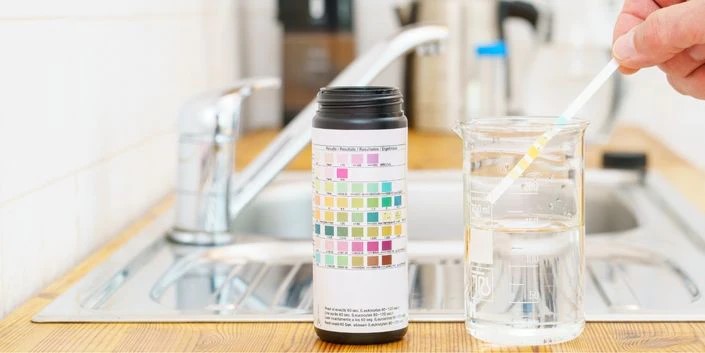
Many consumers encounter quick-check chemical test strips or rapid colorimetric testing kits at hardware retail stores. While these consumer screening kits offer rapid qualitative curiosity, they routinely fail to detect lead at low parts-per-billion concentrations that are medically relevant to pregnant mothers and growing toddlers. According to scientific guidance provided by the EPA basic information about lead in drinking water, certified laboratory testing remains the recognized standard because analytical instruments like inductively coupled plasma mass spectrometry measure trace metals down to fractions of a single microgram per liter.
Accredited environmental laboratories provide sterile collection containers, step-by-step documentation, and standardized preservation materials to guarantee that every sample collected reflects real residential drinking patterns. If you are reviewing your property’s plumbing health, establishing reliable baseline testing parameters removes the dangerous guesswork of sensory evaluation and creates an official diagnostic record for your household records.
Furthermore, certified environmental testing methods differentiate between dissolved lead ions and particulate lead fragments. Dissolved lead is completely solubilized in the water matrix, entering the body readily upon ingestion, whereas particulate lead consists of minute physical flakes dislodged from solder joints or scale deposits. Inexpensive strip kits cannot distinguish between these two forms and frequently yield false negatives when particles fail to react with test reagents immediately.
Preparing for the First-Draw Collection
To gather an accurate sample, the plumbing system inside your residence must remain undisturbed for an extended stagnation interval. A proper first-draw sample specifically measures the metals that leach from the interior surfaces of your kitchen faucet, aerator assembly, fixture shutoff valves, and immediately adjacent supply lines while water rests overnight.
Plan your testing schedule so that no water is drawn from any fixture in the home for a minimum of six consecutive hours prior to collection. This means no toilet flushing, no late-night kitchen glasses, no automatic ice makers running cycles, and no early-morning laundry or showers. Placing a piece of painter’s tape across the primary kitchen faucet handle serves as an effective reminder for other household members during the overnight stagnation period.
Environmental testing methodologies often evaluate multiple biological and chemical safety markers across older metropolitan building portfolios. For instance, commercial property managers routinely commission Legionella water testing in Brooklyn alongside standard heavy metal screenings to ensure cooling towers, potable hot water loops, and internal plumbing risers satisfy local microbial and municipal chemical compliance regulations simultaneously.
Maintaining an uninterrupted stagnation window ensures that the chemical interaction between stationary water and metallic plumbing alloys reaches equilibrium. If a family member accidentally runs the tap at 3:00 AM, the sampling clock must be reset. Attempting to test water after only one or two hours of stagnation creates an artificially low measurement that can lead to a dangerous false sense of security.
Step-by-Step Sample Collection Protocol
Follow these precise procedural instructions when collecting your potable drinking water samples to prevent accidental cross-contamination or skewed laboratory findings:
1. Position the Primary Collection Bottle: Place the clean one-liter or 250-milliliter wide-mouth container supplied by your state-certified testing laboratory directly under the cold water tap before touching the handle. Never run the hot water line for lead sampling, as thermal energy accelerates metal leaching and provides an unrepresentative reading of daily consumption patterns.
2. Capture the Immediate First Draw: Turn the cold water valve to a steady, moderate flow rate without splashing, capturing the very first drops that exit the spout. Do not remove the faucet aerator or fine screen prior to this sample, as trapped solder debris or sediment particles inside the aerator represent real physical ingestion hazards for your family.
3. Seal and Label the Specimen: Tighten the specialized laboratory cap securely without touching the inner surface of the cap or container rim with your fingers. Record the exact sampling date, collection timestamp, faucet location, and stagnation duration on the waterproof exterior container label.
4. Collect the Flushed Comparison Bottle: Depending on your laboratory’s protocol, you may be instructed to let the tap run uninterrupted for two to three minutes before filling a second collection bottle. This secondary flushed sample reveals the water quality entering your residence directly from the public street utility connection, distinguishing localized fixture contamination from utility-side service line exposure.
5. Maintain Proper Transport Conditions: Ensure sample bottles are packed in accordance with laboratory chain-of-custody instructions. While drinking water samples do not typically require ice packs unless microbiological testing is conducted concurrently, protecting the bottles from direct sunlight and excessive summer heat preserves analytical integrity during shipping.
Deciphering Laboratory Results and Action Thresholds
When your official analytical report arrives from the testing facility, the results will typically be expressed in parts per billion (ppb) or micrograms per liter (ug/L), which represent equivalent numerical measurements. The federal regulatory action level established under utility compliance frameworks sits at 15 ppb, but leading global health bodies emphasize that this benchmark is an engineering trigger rather than a biological safety barrier. As documented in the WHO fact sheet on lead poisoning and health, medical consensus confirms that there is no identified safe blood lead concentration in young children, meaning any detectable level warrants proactive mitigation.
Urban infrastructure often presents distinctive plumbing complexities where older street distribution networks interface with modern interior piping retrofits. In dense metropolitan districts, property owners seeking clarity on utility-to-building transitions frequently consult municipal water testing in Manhattan to systematically distinguish utility main contributions from private interior riser solder.
If your laboratory findings indicate elevated readings, comparing your numbers against the broader physiological mechanisms of lead exposure provides valuable clarity regarding how ingestion pathways interact with developing organ systems. Families dealing with uncertain water test reports can explore our FAQ section to understand common unit conversions and filtration certification standards.
Understanding whether your test result reflects acute fixture leaching or continuous main contribution determines your remedial strategy. When the first-draw bottle displays 22 ppb while the flushed sample drops to non-detectable levels under 1 ppb, the source of contamination is localized inside the home—such as a legacy brass kitchen tap or soldered shutoff valve. Conversely, if both samples exhibit elevated metal concentrations, the contamination originates further back in the underground service line or utility distribution network.
Immediate Remediation and Practical Solutions
Discovering detectable lead in your drinking water does not mean you must immediately vacate your property or panic, but it does require disciplined, sensible safeguards while long-term plumbing corrections are arranged:
First, implement a rigorous morning tap flush whenever water has sat idle for several hours. Running your cold tap until the water becomes noticeably colder ensures you have cleared the stationary volume that absorbed metal ions from your interior plumbing walls. Always reserve flushed water for watering houseplants or washing dishes rather than letting it go to waste.
Second, inspect and maintain your water filtration hardware. Standard pitcher filters designed solely for taste and odor reduction using simple carbon mesh do not remove heavy metal ions. Look specifically for point-of-use units certified under NSF/ANSI Standard 53 for lead reduction or NSF/ANSI Standard 58 for reverse osmosis treatment. Readers wishing to discuss plumbing remediation options or schedule follow-up verification testing are encouraged to contact our environmental specialists for tailored residential guidance.
Third, routinely unscrew and inspect your faucet aerators every three to six months. Mineral scale, sediment chips, and tiny metallic fragments often become trapped behind the wire mesh. Submerging the disassembled aerator components in white vinegar for twenty minutes dissolves mineral encrustations, after which brushing with an old toothbrush removes any dislodged heavy metal particulates that could otherwise contaminate drinking glasses.
Summary and Long-Term Protection
Periodic drinking water evaluation provides vital peace of mind for families, prospective home buyers, and rental tenants alike. By pairing consistent first-draw sampling protocols with accredited laboratory analysis, you establish a reliable baseline that protects your family from silent chronic ingestion. Revisit your water quality whenever major municipal excavation occurs along your street or after completing major interior plumbing alterations, ensuring your household maintains clean, safe drinking water for years to come.