Introduction: Deciphering the Invisible Risk in Tap Water
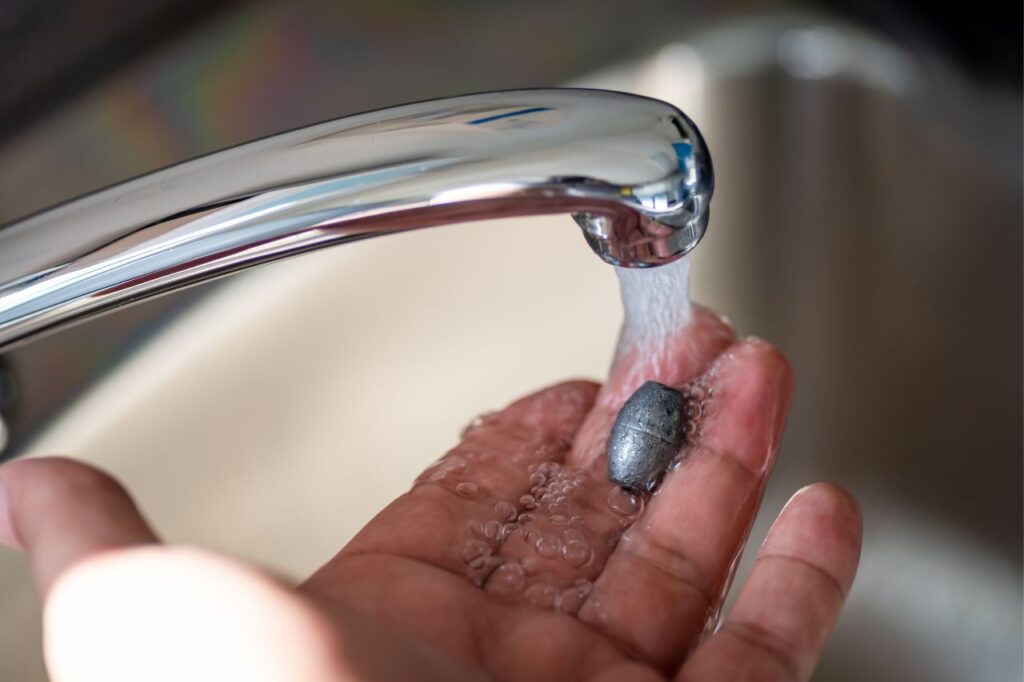
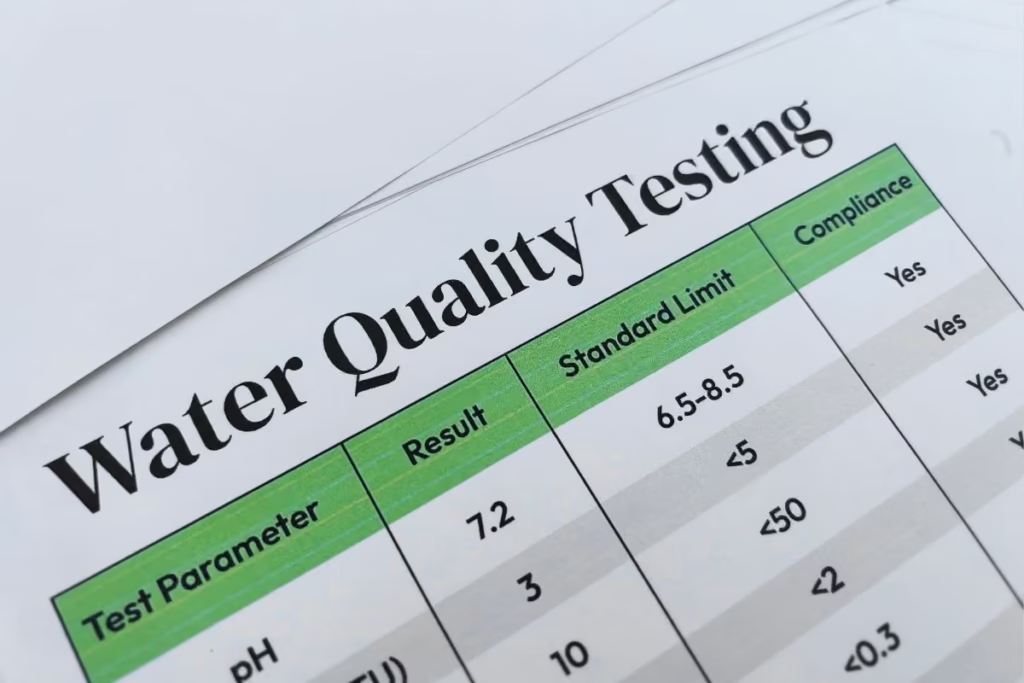
Clean, clear water pouring from a tap often gives a false impression of absolute purity. Unlike microbial contaminants or sediment that cause cloudiness, foul odors, or off-putting tastes, dissolved heavy metals—most notably lead (Pb)—are invisible, odorless, and entirely tasteless at typical concentrations. When property owners, facility directors, and residents receive a laboratory analytical report, they are frequently confronted with a dense matrix of technical terminology, measurement units, regulatory abbreviations, and detection thresholds. Interpreting what these figures actually indicate is essential for making informed decisions regarding human health, regulatory compliance, and plumbing infrastructure maintenance. Organizations dedicated to environmental health, such as A Safe Tomorrow, emphasize that data without context leaves building occupants vulnerable to unaddressed chronic exposures.
Lead contamination in drinking water is rarely an issue originating at municipal treatment facilities. Instead, it is an extraction phenomenon: corrosive chemical dynamics within the water leach lead directly from aging service lines, lead-soldered copper joints, brass fixtures, and legacy galvanized piping. Because exposure occurs at the point of consumption, grasping the exact mechanics of laboratory testing, knowing how regulatory thresholds differ from public health guidelines, and executing proper diagnostic protocols are necessary steps for safeguarding residential and commercial environments.
The Science of Measurement: Units, Ratios, and Detection Limits
When reviewing a certified laboratory report, the primary data column displays the analyte concentration alongside specific measurement units. In water chemistry, lead concentration is routinely expressed in two interchangeable formats: parts per billion (ppb) or milligrams per liter (mg/L). Navigating these values requires understanding the mathematical and physical relationship between them:
1 part per billion (ppb) = 1 microgram per liter (μg/L) = 0.001 milligrams per liter (mg/L)
To put this in perspective, one part per billion represents the volumetric equivalent of a single drop of water diluted into an Olympic-sized swimming pool. Despite this microscopic scale, heavy metals exhibit severe biological potency. Understanding this sensitivity clarifies why analytical instruments must operate at extreme precision.
Method Detection Limit (MDL) and Practical Quantitation Limit (PQL)
Laboratories utilize advanced spectroscopic methodologies—predominantly Inductively Coupled Plasma Mass Spectrometry (ICP-MS) or Graphite Furnace Atomic Absorption (GFAA)—to measure trace metals. Reports often note values such as “ND” (Non-Detect) or list a number preceded by a less-than symbol (e.g., <0.5 ppb). This introduces two critical operational benchmarks:
The Method Detection Limit (MDL) represents the minimum concentration of lead that an analytical instrument can identify with 99% statistical confidence as being greater than zero. The Practical Quantitation Limit (PQL), or Reporting Limit (RL), reflects the lowest level that can be reliably and quantitatively measured within specified limits of precision during routine lab operations. If your test result states “<1.0 ppb,” it does not unequivocally guarantee that zero atoms of lead exist; rather, it confirms that any lead present falls below the instrument’s verified quantification boundary.
Regulatory Thresholds vs. Biological Reality
A frequent source of confusion among property managers and homeowners is the discrepancy between what the law permits and what medical science deems safe. Commercial facilities navigating urban compliance often schedule professional evaluations; for instance, specialized water testing for office buildings in the Bronx ensures enterprise systems comply with local mandates while identifying specific fixture vulnerabilities before staff return to on-site work.
The United States Environmental Protection Agency (EPA) enforces the Lead and Copper Rule (LCR), which established an Action Level of 15 ppb (0.015 mg/L), recently adjusted to an updated 10 ppb trigger level under modern revisions. However, the Action Level is not a medical standard. It is an administrative mechanism designed to assess whether public water utilities must optimize corrosion control chemistry or replace utility-owned lead service lines. Under federal rules, if more than 10 percent of collected customer tap samples exceed this threshold, the utility must initiate mandatory remediation protocols.
Conversely, public health authorities and medical researchers evaluate water through the lens of human cellular physiology. Both clinical guidelines and toxicological research underscore that there is no safe blood lead level in children. The federal health consensus outlined by the Centers for Disease Control and Prevention establishes that even microscopic concentrations produce irreversible neurological, developmental, and renal deficits. Consequently, the EPA’s non-enforceable Maximum Contaminant Level Goal (MCLG) for lead in drinking water is set squarely at zero. Any detectable presence above zero carries potential biological consequence over cumulative exposure periods.
Pathophysiology: Biological Mechanisms of Lead Toxicity
Why is the human body so exceptionally susceptible to trace amounts of lead? The primary biological mechanism is molecular mimicry. Divalent lead ions (Pb2+) mimic divalent calcium ions (Ca2+) and zinc ions (Zn2+), two elements critical to metabolic signaling, neural transmission, enzymatic activation, and structural cellular integrity.
Neurological Disruption and Cellular Arrest
Because lead mimics calcium, it readily crosses the blood-brain barrier. Once inside neural tissue, lead ions impair synaptic pruning, block N-methyl-D-aspartate (NMDA) receptor complexes, and inhibit neurotransmitter release. In developing brains, this disrupts myelin sheath formation, leading to permanent reductions in cognitive function, diminished attention spans, executive dysfunction, and behavioral disorders. In adults, chronic low-level ingestion promotes arterial hypertension, progressive glomerular filtration rate degradation in the kidneys, and cardiovascular disease via persistent endothelial oxidative stress.
Bioaccumulation and Skeletal Sequestration
The biological half-life of lead varies dramatically depending on the physiological compartment. In circulating blood, lead exhibits a half-life of approximately 30 to 40 days. In soft visceral organs, it persists for several months. However, once absorbed into skeletal structures, lead integrates into the hydroxyapatite matrix, where its clearance half-life spans decades (20 to 30 years). During periods of rapid bone turnover—such as pregnancy, lactation, menopause, or advanced age—sequestered lead can mobilize back into the bloodstream, creating secondary internal exposure events even years after external consumption ceases.
Empirical Sampling Protocols: First Draw vs. Flushed Samples
The validity of a water testing result relies entirely on the sampling methodology used during collection. A single grab sample from a random faucet provides negligible diagnostic insight into plumbing infrastructure. Accurate diagnostics require paired, empirical methodologies that pinpoint precisely where leaching occurs.
To establish an accurate operational baseline, property owners should execute a verified diagnostic profile, as outlined in technical guides for baseline testing. Establishing this reference framework ensures subsequent samples reflect true infrastructure performance rather than temporary environmental anomalies.
First-Draw Sampling Protocol
A first-draw sample measures the concentration of lead after water has remained stagnant within the interior plumbing for a minimum of 6 to 8 hours (stagnation period). The sample is collected immediately upon opening the tap, capturing the initial liter of discharge. This specific volume reflects water that sat in direct, prolonged contact with the fixture itself (faucet stem, aerator, internal brass components) and the immediate supply lines. High lead concentrations in a first-draw sample indicate that the faucet, shutoff valves, or adjacent solder are the dominant contributors to contamination.
Flushed (Purged) Sampling Protocol
A fully flushed sample is collected after running the water at high velocity until a distinct temperature drop occurs—typically 2 to 5 minutes, depending on the building layout—confirming that the water originates from the main water line beneath the street. Testing this secondary volume isolates the quality of the water entering the structure from the municipal distribution network. If the flushed sample contains elevated lead, the contamination source is almost certainly an exterior lead service line (LSL) or the municipal distribution branch rather than internal fixture solder.
For multi-family properties, co-ops, and residential developments across outer boroughs, scheduling independent water testing in Queens provides objective, third-party verification that delineates whether water quality issues stem from city-side service mains or legacy interior risers.
Plumbing Infrastructure Diagnostics: Where Does the Lead Originate?
Understanding test values requires cross-referencing data with the physical components of the plumbing network. Buildings constructed prior to the 1986 Safe Drinking Water Act amendments commonly contain several high-risk materials:
1. Lead Service Lines (LSLs): These large-diameter pipes connect the municipal water main in the roadway directly to the building’s internal meter. LSLs represent the single largest contributor to severe drinking water contamination, capable of shedding particulate lead spikes measuring hundreds of parts per billion during physical shock or chemical fluctuation.
2. Copper Piping with Lead Solder: Prior to the federal ban restricting solder to less than 0.2% lead, plumbing installations routinely utilized 50/50 tin-lead solder. When water exhibits low pH or inadequate buffering alkalinity, galvanic corrosion cells form between the dissimilar copper pipe and lead solder, steadily releasing lead ions into the water column.
3. Leaded Brass Fixtures and Valves: Until January 2014, federal regulations permitted plumbing fittings and faucets labeled as “lead-free” to contain up to 8% lead by total weight. Current standards mandate a weighted average of no more than 0.25% across wetted surfaces. Consequently, older brass faucets and pressure valves can continuously leach contaminants into stagnant lines.
4. Galvanized Steel Risers: Decades of contact with upstream lead lines cause the zinc coating on galvanized iron pipes to capture and adsorb lead particles. As these pipes corrode internally, they release historical lead reserves back into the water stream unpredictably, even after upstream lead service lines have been fully excavated and replaced.
A Strategic Interpretation Framework
When reviewing a quantitative lab sheet, organize findings into diagnostic tiers to establish an informed course of action:
Tier 1: Non-Detectable or Below 1 ppb (<1 μg/L)
This represents an ideal analytical scenario. The plumbing distribution network demonstrates chemical stability, passivating films are intact, and fixtures meet modern low-lead criteria. Routine annual monitoring is sufficient.
Tier 2: Low-Level Presence (1 to 4.9 ppb)
While well within federal municipal standards, this tier indicates minor galvanic leaching or stagnant degradation from brass valves or soldered joints. Vulnerable individuals (infants on reconstituted formula, pregnant women) should utilize certified point-of-use filtration, and routine morning flushing protocols should be implemented.
Tier 3: Moderate Contamination (5 to 14.9 ppb)
This range exceeds several proactive institutional action standards (such as the 5 ppb threshold utilized by the Food and Drug Administration for bottled water). Remediation planning is strongly advised. Sequential diagnostic profile testing must be conducted to identify whether the source is the fixture, branch line, or incoming service pipe.
Tier 4: Regulatory Action Exceedance (15 ppb and Above)
Immediate protective measures are warranted. The tap should not be utilized for drinking, cooking, or infant formula preparation without specialized filtration. Mechanical remediation—including plumbing replacement, fixture upgrades, or certified whole-facility filtration systems—must be scheduled immediately.
Federal health and environmental agencies offer extensive remediation guidance. The practical frameworks provided by the United States Environmental Protection Agency outline both operational actions and engineering interventions designed to eliminate multi-system lead hazards safely.
Immediate and Long-Term Remediation Strategies
Receiving an elevated laboratory result requires measured, sequential corrective actions rather than reactionary assumptions. Implementing evidence-based engineering controls ensures building occupants remain protected while root causes are resolved.
Short-Term Operational Protocols
Cold Water Dedicated Usage: Hot water dissolves heavy metals significantly faster than cold water due to elevated kinetic energy and accelerated galvanic reactivity. Never use hot tap water for drinking, boiling, cooking, or preparing baby formula. Always draw cold water and heat it externally if needed.
Calculated Morning Flushing: If a tap has sat idle for several hours, run the cold water tap until the stream turns distinctly colder before drawing water for consumption. This purges water that has sat directly against internal fixture alloys.
Aerator Maintenance: Unscrew and inspect the fine mesh screens on faucet spouts monthly. Plumbers working on street mains or internal risers can dislodge brittle lead solder flakes that lodge in faucet aerators, continually shedding dissolved lead into incoming water.
Advanced Point-of-Use (POU) Filtration
Conventional pitcher filters designed strictly for aesthetic taste and chlorine reduction will not reliably extract heavy metal ions unless explicitly certified to do so. When selecting filtration technology, always require third-party independent certification: NSF/ANSI Standard 53 (specifically for lead reduction) or NSF/ANSI Standard 58 (for reverse osmosis systems). These systems utilize activated carbon block matrices, specialized ion-exchange resins, or thin-film composite membranes engineered to strip dissolved and particulate lead down to non-detectable levels.
Infrastructure Replacement
The only definitive, permanent cure for lead in drinking water is the complete physical extraction of lead-bearing plumbing materials. Partial lead service line replacements—wherein the utility replaces its section under the street while leaving the customer-owned segment intact—can exacerbate water contamination. Splicing new copper to old lead creates an aggressive galvanic connection that can accelerate lead leaching into the home for months. Complete, coordinated replacement from the water main directly to the internal distribution manifold remains the gold standard in facility engineering.
For technical clarification on standard sampling protocols, laboratory accreditation requirements, and remediation benchmarks, consulting a comprehensive environmental testing FAQ helps address procedural questions encountered during diagnostic evaluations.
Conclusion: Building Long-Term Environmental Assurance
A drinking water analytical report provides actionable environmental intelligence. Recognizing that regulatory thresholds like the EPA Action Level reflect administrative utility benchmarks rather than health assurances empowers property owners to take sensible, proactive steps. By analyzing measurements in parts per billion, distinguishing between fixture-level first draws and infrastructure-level flushed samples, and deploying certified filtration technologies, facility leaders can systematically eliminate exposure risks.
Achieving long-term potable water safety requires continued diligence, systematic re-testing after plumbing alterations, and adherence to established public health guidelines. Exploring curated environmental health tools and compliance materials through verified water safety resources equips stakeholders to maintain modern, transparent, and verified water safety standards across any residential or commercial building portfolio.