Understanding the Persistent Threat of Lead in Residential Soil
Urban and suburban properties frequently inherit unseen industrial legacies. Among the most pervasive environmental toxins encountered by homeowners and community gardeners is elemental lead. Unlike organic compounds that break down over time, lead does not biodegrade, volatilize, or naturally decompose. Once deposited on topsoil through decades of leaded gasoline emissions, peeling exterior architectural paint, industrial emissions, or historical pesticide applications, it binds tightly to the upper soil layers. Addressing this heavy metal requires an understanding of environmental chemistry, biological interactions, and precise physical remediation protocols.
The primary vector of childhood and adult toxicity from outdoor soil is not typically dermal absorption. Instead, the greatest risk stems from incidental ingestion via hand-to-mouth transfer, inhalation of fugitive soil dust, and tracking contaminated particulates into residential interiors on shoes and pets. According to health guidance from the National Institute of Environmental Health Sciences, chronic low-level lead exposure damages neurological development, impairs cognitive performance in young children, and contributes to cardiovascular hypertension and renal dysfunction in adults. Establishing a resilient, safe outdoor space demands moving past visual assumptions toward rigorous diagnostics and proactive garden design.
Homeowners interested in safeguarding their outdoor environments should begin with systematic environmental assessments. Reviewing our ongoing educational library and environmental health blog provides valuable historical perspectives on how regional infrastructure patterns influence backyard soil safety.
Diagnostic Soil Assessment and Analytical Standards
Visual inspection is incapable of detecting heavy metal contamination. Soil color, organic rich textures, and lush vegetative growth do not correlate with chemical safety. The only defensible method for determining your yard’s safety profile is systematic sample collection submitted to an accredited environmental testing laboratory specializing in Inductively Coupled Plasma Mass Spectrometry (ICP-MS) or Atomic Absorption Spectroscopy (AAS).
When conducting field sampling, homeowners should avoid taking a single superficial scoop. Instead, divide your property into distinct functional zones: the structural drip line directly beneath home foundations, high-traffic play lawns, open turf, and active vegetable plots. Exterior walls coated in historical paints prior to the 1978 federal residential ban frequently shed microscopic paint dust, making perimeter foundations disproportionately hazardous compared to open turf.
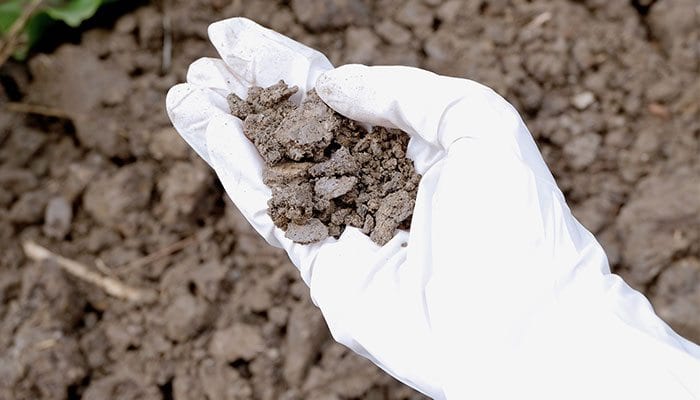
Collect five to ten core subsamples per zone at a depth of zero to two inches for general lawn areas, and zero to six inches for prospective root zones. Thoroughly homogenize these cores in a clean plastic container before packaging the composite sample for laboratory submission. Integrating an initial diagnostic baseline with professional environmental baseline testing establishes a legally verifiable benchmark for your property’s soil chemistry, giving you actionable data rather than ambiguous estimates.
Interpreting laboratory reports requires benchmarking your parts-per-million (ppm) or mg/kg results against federal and state environmental standards. While historical thresholds tolerated soil concentrations up to 400 ppm in play areas and 1,200 ppm in general landscaping, modernized research published by the Environmental Protection Agency has drastically lowered actionable guidance levels to better protect vulnerable populations. Concentrations exceeding 100 to 200 ppm in bare soil areas occupied by children warrant direct remediation or physical barrier mitigation.
Cross-Media Contamination: Evaluating Outdoor Irrigation Water
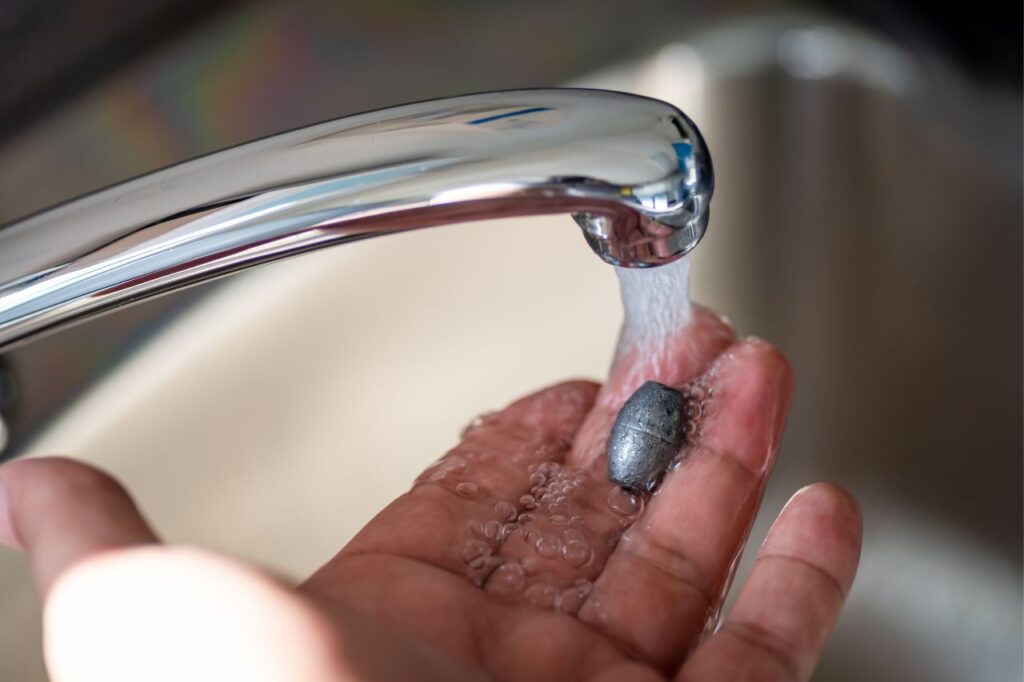
Soil contamination rarely exists in complete isolation. When designing an outdoor remediation program, gardeners frequently overlook the chemistry of the water used for daily irrigation. Municipal distribution lines, aged residential service laterals, and older plumbing fixtures often introduce dissolved heavy metals into otherwise pristine garden plots. Repeatedly watering clean soil with lead-tainted tap water can slowly reintroduce heavy metals directly into the root zones of edible plants.
For property owners residing in dense metropolitan regions, verifying municipal supply purity is an indispensable step. Consulting certified Manhattan water testing experts ensures that outdoor hose bibbs and automated drip systems are not surreptitiously accumulating toxic trace elements across your landscaping footprint during peak summer irrigation.
Testing outdoor spigots requires drawing a first-draw sample after water has remained stagnant in service pipes overnight, followed by a flushed sample collected after running the tap for two minutes. This diagnostic differentiation determines whether dissolved lead originates from localized copper pipe solder joints or public distribution mains.
Biological Mechanisms of Plant Uptake and Translocation
Understanding how plants interact with lead is essential for designing a safe edible garden. Fortunately, botanical species possess inherent biological barriers that restrict the translocation of lead from roots to reproductive organs. Soil-bound lead typically enters plant root systems via passive apoplastic flow, where it encounters the Casparian strip—a waxy cellular barrier in the endodermis that impedes systemic vascular movement.
Consequently, the physical allocation of lead within vegetable crops follows a steep, predictable gradient: root tissues accumulate the highest concentrations, followed by vegetative leaves and stems, with negligible translocation into fruiting bodies, seeds, and flowers. Edible crops exhibit vastly different exposure profiles:
Root Crops (High Risk): Carrots, radishes, beets, turnips, and potatoes present the highest intake risk. These plants come into direct physical contact with contaminated matrix soils. Fine root hairs absorb microscopic lead particles, and outer peel skins become embedded with lead complexes that cannot be rinsed clean with water.
Leafy Greens (Moderate to High Risk): Lettuce, spinach, kale, and chard translocate small amounts of heavy metals into foliar tissue. More critically, their broad surface areas serve as catch basins for windblown soil dust and splashback during heavy rain events, creating an ingestion hazard if not washed meticulously.
Fruiting Botanicals (Lowest Risk): Tomatoes, peppers, squash, cucumbers, eggplants, beans, and peas are biologically shielded. Heavy metals are largely sequestered in roots and lower stems, preventing significant translocation into fruit flesh. If cultivated in moderately elevated soil, these varieties remain relatively safe, provided surface splash dust is thoroughly cleansed prior to consumption.
Engineering Protective Protocols: Soil Amendment and Physical Barriers
When native soil tests reveal lead levels ranging between 100 and 400 ppm, complete excavation is rarely cost-effective or practical. Instead, environmental professionals recommend two complementary engineering strategies: chemical stabilization through soil amendments, and physical containment via engineered infrastructure.
Chemical Stabilization and Bioavailability Reduction
Soil chemistry dictates whether lead remains soluble or tightly bound in mineral forms. By altering soil pH, organic matter content, and phosphorus availability, you can precipitate bioavailable lead into pyromorphite—an insoluble lead-phosphate mineral that passes harmlessly through mammalian digestive tracts if swallowed accidentally:
Adjust Soil pH: Maintain soil pH strictly between 6.5 and 7.0 using agricultural lime. Acidic soils (pH below 6.0) dramatically increase heavy metal mobility and plant bioavailability, whereas near-neutral conditions promote chemical adsorption to mineral clays.
Phosphorus Enrichment: Incorporate composted animal manures, bone meal, or triple superphosphate into non-edible landscape soils. Orthophosphate ions bind rapidly with free lead ions to synthesize stable pyromorphite lattices.
Organic Matter Incorporation: Blend mature compost, leaf mold, and sphagnum peat moss at a minimum volumetric ratio of 30 percent organic matter to 70 percent mineral soil. Humic and fulvic acids contain functional carboxyl and phenolic groups that form robust organo-metallic chelates, locking lead away from root access.
Engineered Infrastructure: Raised Beds and Geotextiles
For native soils testing above 400 ppm, physical isolation is imperative for any area designated for edible crops or children’s recreation. Raised bed construction eliminates interaction with legacy urban topsoil when assembled according to strict environmental guidelines:
Begin by smoothing native grade and installing a commercial-grade, non-woven polypropylene geotextile fabric across the ground footprint. This permeable barrier prevents plant roots from penetrating downward while stopping contaminated subsurface soil from migrating upward due to earthworm bioturbation or freeze-thaw cycles. Do not use impermeable plastic sheets, which trap water and suffocate beneficial aerobic microbiology.
Construct raised bed containment walls using non-leaching materials such as cedar, redwood, untreated dimensional lumber, stone, or powder-coated galvanized steel. Ensure bed depth reaches a minimum of twelve to eighteen inches to accommodate deep-rooting vegetable cultivars. Fill beds exclusively with certified organic planting media blended from clean topsoil, compost, and coarse horticultural vermiculite sourced from suppliers providing verifiable heavy metal screening assays.
Urban agriculture initiatives must also assess utility connections and shared water infrastructure. When coordinating garden plots or shared courtyard beds in multifamily settings, scheduling water testing for apartment buildings in Queens confirms that aged plumbing stacks and exterior communal lines deliver lead-free irrigation to shared raised containers.
Comprehensive Yard Maintenance and Exposure Reduction
Protecting your household from soil contamination requires daily landscape management practices that mitigate fugitive particulate movement across your entire property:
Maintain Continuous Soil Groundcover: Bare earth generates windblown dust. Maintain dense turfgrass, clover lawns, or a minimum four-inch layer of clean wood mulch, bark chips, or pea gravel over all open landscape beds. Mulch barriers break raindrop impact velocity, preventing toxic mud from splashing onto home siding, play equipment, and edible plants.
Establish Drip Line Exclusion Zones: The three-foot perimeter directly adjacent to historic building foundations represents the highest risk zone for concentrated paint dust. Plant ornamental, non-edible shrubs in these margins, cap the underlying soil with permeable filter fabric, and cover the zone with river rock or ornamental stone to deter child play and pet access.
Build Mudroom Decontamination Protocols: Up to eighty percent of heavy metal dust inside residential homes is tracked in on shoes, clothing, and domestic pets. Install stiff bristle boot scrubbers at outdoor entryways, mandate a strict outdoor footwear removal policy, and wipe down pet paws before interior entry. Clean indoor hard flooring using wet-microfiber mopping and HEPA-filtered vacuums to trap settling particles.
Culinary and Harvesting Best Practices: Always discard the outer leaves of cabbage, lettuce, and leafy greens. Wash all produce thoroughly in a one-percent vinegar bath or mild biodegradable soap solution rather than relying on brief tap rinses to dislodge microscopic soil particles. Thoroughly peel all root vegetables cultivated in ground soil, and clean your hands and gardening tools before eating or storing equipment.
Homeowners looking for additional safety checklists, equipment suggestions, and environmental guidelines can review our curated index of lead safety resources to streamline yard planning.
Long-Term Stewardship and Household Safety
Remediating lead-contaminated soil is an ongoing process of stewardship rather than a one-time fix. Organic mulch degrades over time and requires seasonal replenishment to preserve protective ground barriers. Raised garden beds settle as organic components mineralize, demanding annual top-dressing with clean compost and testing every three to five years to verify that native contaminants have not entered the planting matrix.
If you have technical questions regarding sampling techniques, screening results, or regulatory thresholds, consult our comprehensive environmental assessment FAQ for detailed technical solutions tailored to residential properties. By combining empirical laboratory testing, targeted soil amendments, robust physical containment, and disciplined yard hygiene, property owners can cultivate productive gardens and secure recreational yards that provide lasting safety for their families and communities.