Why Flushing Your Tap Matters for Lead Safety
When drinking water leaves a municipal treatment plant, it is rigorously monitored, chemically stabilized, and tested to meet stringent federal standards. Yet, the water flowing from your kitchen or bathroom faucet may tell a completely different story. Between the municipal water main beneath the street and the drinking glass in your hand lies an intricate labyrinth of subterranean infrastructure, private service lines, riser pipes, shut-off valves, and internal plumbing fixtures. Whenever water comes to rest inside these metal conduits, physical and chemical transformations take place. Understanding why tap flushing serves as an indispensable first-line intervention requires a deep examination of hydraulic stagnation, chemical leaching dynamics, and biological vulnerability.
Lead remains one of the most insidious environmental hazards because it cannot be seen, tasted, or smelled when dissolved in drinking water. Unlike airborne particulate matter or surface dust, lead in plumbing systems leaches directly into a potable solvent that individuals ingest daily. While modern building codes have banned lead pipes and high-lead solder, legacy materials persist quietly inside millions of utility systems and residential dwellings, continuing to expose occupants during periods of ordinary tap operation.
The Chemistry of Stagnation: How Lead Enters Sitting Water
To understand the necessity of flushing, one must first examine the behavior of standing water. Municipal water suppliers maintain specific chemical parameters—most notably pH levels, alkalinity, and dissolved orthophosphate inhibitors—designed to coat the interior walls of pipes with a protective mineral crust known as a passivation layer. This mineralized coating acts as a barrier, preventing dissolved oxygen and corrosive elements in water from reaching the underlying bare metal.
However, this protective equilibrium is dynamic and fragile. When a faucet remains closed overnight or during the workday, the water inside the plumbing lines becomes completely stagnant. Over hours of zero hydraulic movement, several chemical reactions accelerate. Dissolved oxygen in the water reacts with metallic surfaces, gradually breaking down microscopic sections of the passivation scale. Furthermore, galvanic corrosion can occur wherever dissimilar metals touch—such as older copper pipes joined with lead-tin solder or brass fittings attached to galvanized steel. As chemical potential differentials drive electron transfer, lead ions migrate from the pipe matrix directly into the water column, a process deeply linked to chronic lead accumulation within aging building infrastructure.
The longer water sits motionless within the fixture or service line, the higher the dissolved concentration of heavy metals climbs until an equilibrium saturation point is reached. When the tap is subsequently turned on, the first draw of water contains the highest concentration of particulate and dissolved lead that accumulated during the resting period.
Biological Mechanisms: The Human Toll of Ingested Lead
The human body treats lead with catastrophic familiarity. Chemically, the divalent lead cation (Pb²⁺) mimics essential minerals, predominantly calcium (Ca²⁺) and iron (Fe²⁺). Because cellular transport mechanisms cannot distinguish lead from calcium, lead easily traverses biological membranes, enters the bloodstream, and readily crosses the blood-brain barrier.
Once inside the nervous system, lead disrupts critical neurotransmitter release by interfering with calcium-dependent signaling cascades. It induces oxidative stress, damages cellular mitochondria, and triggers premature apoptosis in neurons and glial cells. These disruptions are devastating for developing brains, resulting in irreversible deficits in cognitive performance, impaired executive functioning, shortened attention spans, and behavioral dysregulation. In adults, chronic low-level ingestion impairs renal filtration, drives vascular resistance leading to hypertension, and accelerates cardiovascular degeneration.
Public health organizations agree that no safe blood lead level exists in humans. According to official guidelines on childhood lead poisoning prevention, even blood lead concentrations previously considered negligible correlate directly with measurable cognitive decline. Because water ingestion contributes significantly to overall body burden, minimizing daily intake via physical tap flushing is an essential preventive action against subtle, cumulative lead exposure.
Structural Infrastructure: Locating the Hidden Sources
Many consumers mistakenly assume that lead concerns only apply to historic houses or pre-war single-family homes. In reality, multiple structural components throughout municipal grids and multi-unit complexes can introduce heavy metal contamination:
Lead Service Lines (LSLs): The pipe connecting the city water main in the street to a building’s internal foundation is historically made of pure lead. These lines represent the largest single source of lead in drinking water. Communities nationwide are now accelerating efforts toward comprehensive lead service line replacement, but millions of active conduits still lie buried beneath city streets.
Lead-Based Solder: Until federal revisions banned high-lead solder in plumbing installations in 1986, contractors routinely utilized 50/50 tin-lead solder to join copper tubing. Millions of structures erected prior to 1987 retain intact copper piping that contains significant quantities of lead solder at every joint.
Brass and Bronze Fixtures: Faucets, stopcocks, pressure regulators, and meters made prior to 2014 were legally permitted to contain up to 8% lead by weight while still carrying a “lead-free” industry designation. Subsequent legislation reduced this allowable threshold to an effective 0.25% weighted average across wetted surfaces, but pre-2014 brass fittings remain widely in service.
In dense metropolitan regions featuring high-rise buildings, multi-family brownstones, and complex commercial plumbing, water stagnation occurs across vertical riser columns and lateral branches. Property owners often engage specialized contractors to conduct residential lead water testing for Manhattan buildings to establish whether elevated readings originate from the municipal utility street connection, vertical distribution risers, or individual apartment fixtures.
Empirical Water Testing: The Science of Stagnation Profiling
Laboratory analysis proves that lead concentration inside a plumbing system is not uniform throughout the volume of water drawn from a tap. Environmental technicians utilize sequential profile sampling to map contamination directly to physical components.
In a standard diagnostic protocol, a tap is sealed and left unused for an absolute minimum of six to eight hours. When the tap is opened, the technician collects a sequence of consecutive one-liter sample bottles without turning off the flow:
First-Draw Bottle (1st Liter): Represents water that sat undisturbed inside the faucet body, aerator, and immediate supply tubing under the sink. Elevated readings here point directly to the terminal fixture or adjacent shut-off valve.
Intermediate Draw (2nd to 4th Liters): Represents water that rested within interior branch pipes and wall cavities. High concentrations in these volumes pinpoint lead-soldered joints or legacy galvanized distribution lines.
Flushed/Service Draw (5th Liter and Beyond): Measures water pulled directly from the underground service line and utility main. If lead numbers spike only after several minutes of running, the buried service line outside the exterior foundation wall is the primary culprit.
Establishing an accurate profile through rigorous laboratory quantification begins with comprehensive baseline testing. Without precise empirical data defining the time required to clear stagnant water volumes, property managers and residents are left guessing about the duration of flush required to reach fresh main water.
Commercial hospitality structures face parallel challenges due to shifting occupancy rates. Unoccupied guest rooms and decommissioned banquet wings experience prolonged water stagnation, often requiring engineered remediation plans. Facility directors frequently mandate professional water testing services for hotels in Manhattan to evaluate multi-floor domestic water loops, ensure guest safety, and maintain strict environmental compliance.
Practical Flushing Protocols: Safe Daily Operation
Flushing is an operational mitigation strategy designed to evacuate stagnant water containing dissolved metals, replacing it with fresh water drawn directly from the actively treated public main. While flushing does not replace permanent pipe replacement, executing it correctly drastically reduces ingested contamination.
1. Determine Your Minimum Flush Time
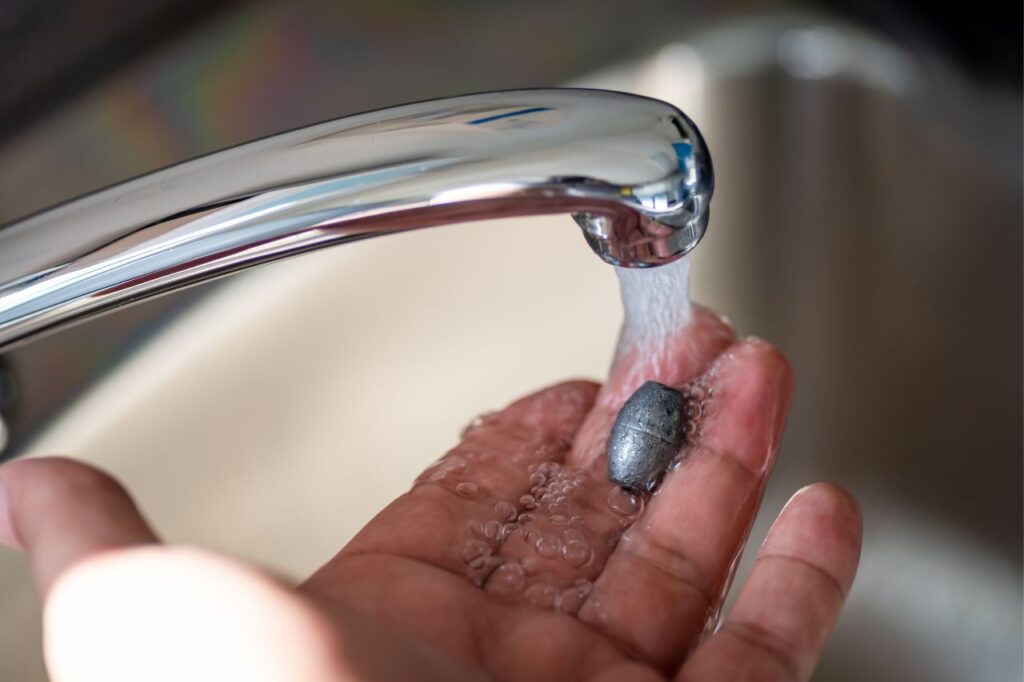
A basic fixture flush takes approximately 30 to 60 seconds if the building does not possess a lead service line. However, if your building is connected to an underground lead service pipe, a complete flush may require 2 to 5 minutes of continuous high-volume water draw. To identify when fresh water arrives, place your hand beneath the stream; you will notice a distinct drop in temperature when water from the underground municipal main reaches your tap.
2. Consolidate Morning Water Usage
Flushing does not require wasting clean water down the kitchen sink drain. You can clear the primary service line and internal plumbing by performing routine morning tasks first—such as taking a shower, flushing toilets, running a load of laundry, or operating the dishwasher. Once these high-volume activities conclude, run the kitchen tap on cold for 30 seconds to evacuate the short branch line before drawing water for consumption.
3. Always Draw Cold Water for Consumption
Never use water from the hot tap for drinking, cooking, brewing coffee, or preparing infant formula. Hot water accelerates the dissolution of metals, leaching lead out of pipes and solder at rates up to ten times faster than cold water. Furthermore, household hot water tanks accumulate sediment that concentrates heavy metals over time. Always run cold water, flush thoroughly, and heat the water on the stove or in an electric kettle if hot water is required.
4. Routine Aerator Cleaning
Faucet aerators are small mesh screens screwed onto the spout of modern faucets. While they regulate flow and prevent splashing, they also trap oxidized lead fragments, solder shavings, and loose pipe scale dislodged by plumbing vibrations. Unscrew aerators monthly, rinse away accumulated debris, soak the screens in white vinegar to dissolve mineral crusts, and flush the bare faucet before reassembling.
Long-Term Remediation and Filtration
While daily flushing provides an effective non-structural protective measure, long-term safety relies on proactive filtration and complete infrastructure replacement. Building managers and residents frequently consult public resources and our comprehensive environmental safety FAQ to identify certified point-of-use filtration units.
Standard pour-through carbon pitcher filters are often incapable of removing particulate and dissolved lead unless they carry specific certifications. Look for filters certified under NSF/ANSI Standard 53 (Health Effects) or NSF/ANSI Standard 58 (Reverse Osmosis Systems), with specific verification for total lead reduction. Used alongside disciplined flushing practices, point-of-use filtration forms a resilient defense against the invisible threat of municipal lead contamination.
Flushing your tap is more than a simple household habit; it is a vital, science-backed procedure that restores chemical safety to your domestic water supply. By recognizing the mechanics of stagnation, locating hidden plumbing hazards, and adhering to strict cold-water flushing routines, homeowners and facility operators take critical control over their drinking water quality and protect long-term human health.