Boiling Water Does Not Remove Lead: Common Myths Debunked
When municipal authorities issue a boil-water advisory or when homeowners detect an unexpected change in municipal tap water quality, the instinctive reaction is often to turn on the stove. For generations, boiling water has stood as the definitive home-remediation technique against waterborne pathogens. Boiling neutralizes bacteria, inactivates viruses, and renders parasitic cysts harmless. However, applying this microbiological solution to chemical or heavy-metal contamination is not merely ineffective—it is actively hazardous. Understanding why boiling water does not remove lead requires examining physical chemistry, metallurgical transport across legacy infrastructure, and modern environmental toxicology.
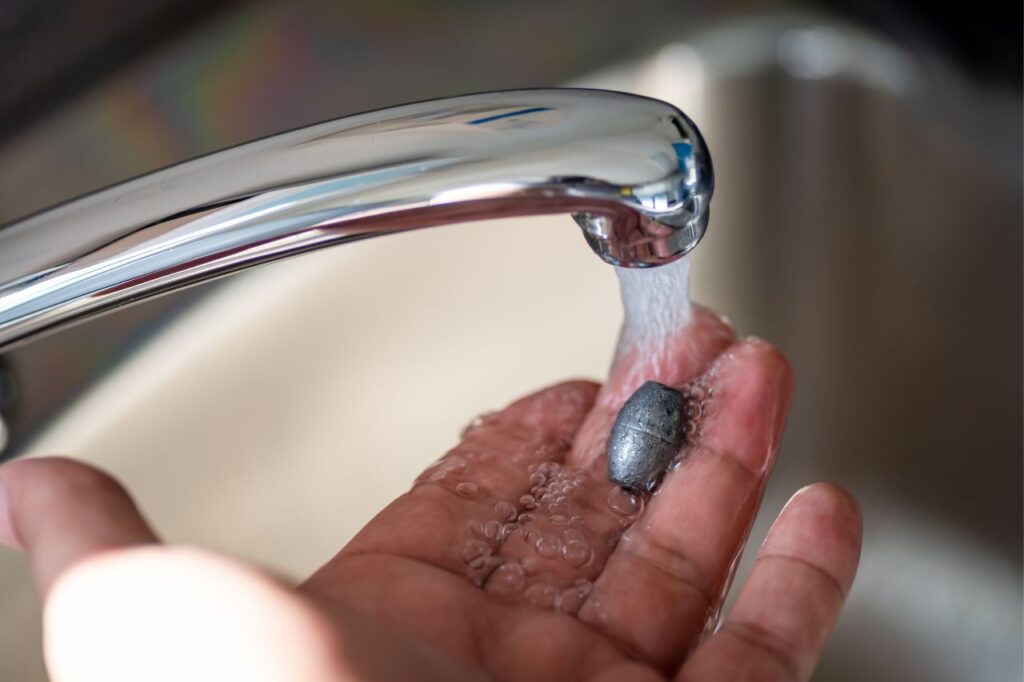
Lead is an elemental neurotoxin with no safe exposure threshold in the human body. Unlike biological contaminants that degrade at pasteurization temperatures, elemental heavy metals do not evaporate or decompose during boiling. Treating metal contamination like a bacterial outbreak compounds toxic risk. To understand broader residential and environmental safety measures, our educational environmental blog explores how outdated assumptions often collide with modern public health science.
The Thermodynamics of Boiling: Why Lead Concentrations Increase
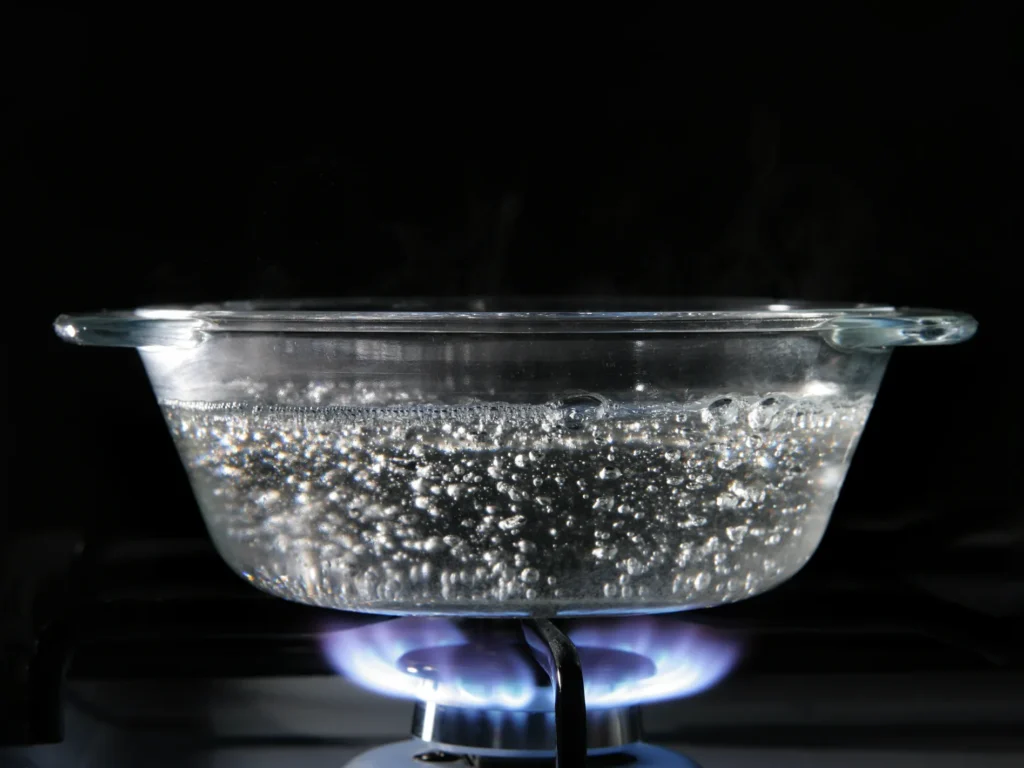
To understand why boiling fails to remediate heavy-metal contamination, one must look at the thermodynamic properties of liquid solutions. Boiling water transforms pure dihydrogen monoxide (H₂O) from a liquid phase into a gaseous vapor phase at 100 degrees Celsius (212 degrees Fahrenheit) at standard atmospheric pressure. In contrast, elemental lead (Pb) possesses a melting point of 327.5 degrees Celsius and a boiling point of 1,749 degrees Celsius. Under domestic heating conditions, lead atoms remain bound in ionic or particulate states within the aqueous solution.
As water reaches a rolling boil, steam continuously escapes into the surrounding atmosphere. This phase transition selectively removes solvent molecules while leaving solute particles behind. Consequently, if one liter of tap water containing 15 parts per billion (ppb) of dissolved lead is boiled down to 750 milliliters, the total mass of elemental lead remains unchanged, but the volume of solvent decreases by twenty-five percent. The resulting concentration of lead rises to 20 ppb. Prolonged boiling does not purify tap water of heavy metals; it acts as a thermal evaporation process that concentrates the toxin.
Particulate lead—microscopic fragments sheared from deteriorating service lines, soldered joints, or aged brass fixtures—also remains unaffected by culinary heat levels. These microscopic particulates disperse suspended throughout the fluid, resisting thermal destruction. Consuming reductions, concentrates, hot teas, or infant formulas prepared from boiled municipal tap water suspected of lead contamination inadvertently delivers a denser chemical dose per volume to the consumer.
Biological Mechanisms: The Human Toll of Lead Exposure
The human body treats lead as a biochemical mimic of calcium, an essential mineral critical for neurotransmission, enzyme activation, and skeletal structural integrity. Upon ingestion, divalent lead ions (Pb²⁺) enter systemic circulation via intestinal transport channels typically reserved for calcium and iron. Once absorbed into the bloodstream, lead crosses the blood-brain barrier with ease, displacing calcium ions within presynaptic nerve terminals and disrupting the release of essential neurotransmitters such as dopamine, glutamate, and acetylcholine.
According to insights documented in the CDC Childhood Lead Prevention Guidelines, no detectable level of lead in human blood is considered safe. Exposure impairs neural architecture by inhibiting long-term potentiation, triggering oxidative stress within glial cells, and accelerating apoptosis in developing cortical neurons. In pediatric populations, the implications are irreversible: diminished cognitive performance, shortened attention spans, motor function deficits, and behavioral dysregulation.
Adult physiological systems suffer equal detriment from chronic low-dose ingestion. Lead bioaccumulates in the skeletal system, embedding into the hydroxyapatite matrix of cortical and trabecular bone with a biological half-life spanning decades. During periods of elevated metabolic bone turnover—such as pregnancy, lactation, or post-menopausal osteoporosis—sequestered lead mobilizes back into maternal circulation. This systemic re-emergence induces gestational hypertension, elevates preeclampsia risk, and crosses the placenta directly to impede embryonic neural development. Chronic exposure among mature populations also manifests as nephropathy, persistent hypertension, and heightened cardiovascular mortality.
Because dietary ingestion represents a primary pathway alongside water consumption, public health regulators also monitor food preparation surfaces, tableware, and canning processes. Detailed guidance on dietary exposure vectors can be reviewed through the FDA Guidance on Lead in Food and Foodwares, illustrating how systemic lead mitigation demands vigilance across all ingestible vectors.
Legacy Infrastructure and the Chemistry of Galvanic Corrosion
Lead does not typically originate in municipal reservoirs or source aquifers. Rather, drinking water becomes contaminated through transport across decaying distribution channels, municipal service lines, private plumbing, and internal fixtures. Prior to the 1986 Safe Drinking Water Act Lead Ban, utility networks widely utilized pure lead service lines (LSLs), lead-tin solders on copper piping, and domestic brass fixtures containing upwards of eight percent lead by weight.
Under equilibrium conditions, municipal water providers manage water chemistry to foster protective mineral scales on inner pipe walls. The introduction of orthophosphate corrosion inhibitors induces the precipitation of insoluble lead phosphate complexes, forming a physical barrier between moving water and bare metal. However, chemical imbalances—shifts in pH, changes in oxidation-reduction potential (ORP), erratic chlorine residuals, or dissolved chloride-to-sulfate mass ratios (CSMR)—can destabilize this passivation layer.
When passivating layers dissolve, galvanic corrosion accelerates. When copper pipes connect directly to legacy lead pipes, the dissimilar metals create an electrochemical galvanic cell where lead acts as the sacrificial anode, oxidizing and releasing soluble lead ions into the water stream. Physical disruption, such as street excavation or domestic pipe maintenance, shears brittle mineral scale, releasing particulate lead surges that bypass traditional sink screens and aerators.
Emerging environmental challenges complicate this dynamic. Municipalities managing industrial runoff, volatile chemical plumes, or per- and polyfluoroalkyl substances face multi-faceted remediation issues. Property owners seeking comprehensive analytical assessments, including specialized PFAS water testing in Manhattan, must deploy targeted, certified analytical methodologies rather than broad-spectrum thermal home remedies that fail against synthetic and elemental hazards alike.
Debunking Common Myths About Lead in Drinking Water
A persistent myth claims that modern municipal treatment plants eliminate the possibility of lead contamination before water reaches individual homes. Municipal facilities regularly adhere to strict primary drinking water regulations at the exit point of the treatment plant. However, treated water must traverse miles of distribution mains, service laterals, and private indoor infrastructure. The quality of water leaving a municipal treatment facility rarely reflects the water discharging from a century-old service lateral into a private kitchen sink.
Another widespread misconception suggests that basic sediment filters, mesh strainers, or standard refrigerator ice-maker cartridges remove lead. Physical particulate strainers possess pore sizes ranging from 5 to 50 microns, designed purely to catch coarse rust, sand, or pipe silt. Dissolved ionic lead molecules measures mere fractions of a nanometer. Standard mechanical straining cannot trap dissolved ions; it requires certified ion-exchange resins or molecular-level filtration barriers to extract these microscopic contaminants from solution.
Additionally, many consumers believe that hot tap water is ideal for boiling or cooking because it boils faster. Water drawn from domestic hot-water heaters accelerates the chemical leaching of lead from interior solders and brass fittings. Heating systems sit for hours maintaining elevated temperatures, dramatically hastening the dissolution of heavy metals from surrounding fittings. Hot tap water should never be used for drinking, cooking, or preparing baby formula, regardless of whether it is subsequently boiled on the stove.
To clarify common residential drinking water questions, property owners can consult our environmental safety FAQ, which details the distinctions between microbiological purification, chemical reduction, and structural water treatment protocols.
Empirical Testing: Certified Laboratory Analysis vs. Home Test Kits
Lead is completely colorless, odorless, and tasteless at concentrations far exceeding statutory action levels. Visual inspection, olfactory cues, or sensory impressions cannot detect whether water contains 5 ppb or 500 ppb of lead. The only reliable mechanism for determining lead contamination is rigorous analytical laboratory testing.
Commercial over-the-counter colorimetric strips and rapid swab kits offer quick results, but they exhibit severe limitations. These screening tools often lack sensitivity below high detection limits and frequently yield false negatives when encountering particulate lead or water with low buffering capacity. Professional assessment relies on accredited environmental testing laboratories employing Inductively Coupled Plasma Mass Spectrometry (ICP-MS) or Graphite Furnace Atomic Absorption Spectroscopy (GFAAS). These instrumentation platforms accurately quantify elemental contaminants down to sub-part-per-billion levels.
Proper sample collection protocol is vital for accurate diagnostic results. Standard testing methodologies utilize a two-tier sampling approach: a “first-draw” sample collected after a minimum of six hours of stagnant contact with internal plumbing, followed by a “flushed” sample taken after water has run continuously for several minutes. The first-draw test isolates leaching originating from internal domestic fixtures and solders, while the flushed test measures the chemistry of the water entering from the underground service lateral and municipal main. Establishing this technical baseline through comprehensive environmental baseline testing equips property owners with the data required to pursue targeted engineering solutions.
Practical Protective Protocols: Certified Filtration and Engineering Controls
When lead is confirmed or suspected in a domestic water supply, property managers and homeowners must bypass folk remedies and execute proven engineering controls to safeguard occupants. The primary operational actions include:
1. Immediate Flushing Protocols
If a plumbing system has sat stagnant for more than six hours, flush the cold-water line for at least two to three minutes before consuming water. This clears stagnant, metal-saturated water from private plumbing lines. While cold-water flushing significantly reduces dissolved lead levels, it remains an interim administrative measure rather than a permanent remediation solution.
2. Certified Filtration Technologies
Only filtration units verified by third-party testing organizations to meet NSF/ANSI Standard 53 (Health Effects) or NSF/ANSI Standard 58 (Reverse Osmosis) for lead reduction should be deployed. Viable systems include:
Activated Carbon Block and Ion-Exchange Hybrids: High-performance point-of-use (POU) filters utilize specialized extruded carbon blocks combined with synthetic cation-exchange resins. As water flows through the porous matrix, the functional exchange media replaces toxic divalent lead ions with benign ions such as sodium or hydrogen, binding the heavy metal within the filter substrate.
Reverse Osmosis (RO) Systems: These systems pass pressurized water through a semi-permeable thin-film composite membrane. With pore apertures operating around 0.0001 microns, RO membranes consistently reject more than ninety-eight percent of dissolved inorganic heavy metals alongside organic compounds, discharging concentrated waste streams safely away from drinking lines.
Atmospheric Distillation Units: Countertop distillation systems boil water in a closed chamber, channel the clean steam into condensing coils, and leave elemental lead, mineral scale, and heavy particulates behind in the boiling chamber. Unlike open-pot boiling, distillation isolates and collects the purified condensate, effectively reversing the concentration hazard.
3. Total Infrastructure Remediation
Long-term eradication of lead risk requires full physical extraction of lead service lines. Partial replacements—where a utility replaces only the public portion of an LSL while leaving the private section intact—can worsen contamination. Mechanical cutting of lead lines causes galvanic shocks that generate sustained spikes in particulate lead for months after work concludes. Full replacement from the municipal main directly to the domestic water meter represents the only definitive engineering cure.
Navigating water safety regulations, selecting certified filtration components, and interpreting laboratory assay reports requires verified engineering references. Property stakeholders can review comprehensive regulatory guidance and technical documentation by exploring our environmental health resources hub, ensuring that all implemented protective protocols align with contemporary public health standards.