Hidden Sources of Lead Around the House You Might Overlook
When most homeowners consider toxic heavy metals, their thoughts immediately pivot to chipping, peeling paint on Victorian baseboards or deteriorating exterior siding. While legacy architectural coatings remain a documented hazard, public health data demonstrates that residential toxicity frequently stems from far more insidious vectors. Decades after primary federal bans took effect, low-level residential exposure persists across built environments, quietly leaching from components embedded in everyday domestic routines. Uncovering these obscure pathways requires moving beyond visual assessments and understanding the physical chemistry, historical construction standards, and regulatory exemptions that allow toxic elements to remain inside our living spaces.
Understanding the systemic danger of sub-clinical contamination starts with understanding human biology. Unlike essential trace minerals such as iron or zinc, heavy metals serve no physiological function in the human body. When ingested or inhaled through microscopic particulates, toxic compounds mimic calcium ions at the molecular level, crossing cellular membranes and lodging directly into soft tissues, neural structures, and bone matrices. Over extended durations, this silent absorption drives progressive lead accumulation, establishing an endogenous reservoir that continuously releases toxins back into the bloodstream during periods of metabolic stress, bone remodeling, pregnancy, or aging.
Cellular Toxicity and Biological Safety Mechanisms
At the cellular scale, toxic metallic ions bind with high affinity to sulfhydryl groups on functional enzymes, crippling mitochondrial energy production and generating extensive reactive oxygen species (ROS). In the central nervous system, these ions disrupt calcium-dependent neurotransmitter release, dismantle synaptic pruning mechanisms, and degrade the protective integrity of the blood-brain barrier. Children are exceptionally vulnerable because their developing gastrointestinal tracts absorb up to 50 percent of ingested metallic ions, compared to roughly 10 to 15 percent in adults. Furthermore, nutritional deficiencies in calcium or iron trigger upregulated divalent metal transporter channels, inadvertently accelerating toxic uptake from subtle household vectors.
Because there is no established biological threshold below which heavy metal intake is considered harmless, chronic low-dose ingestion represents an urgent public health challenge. Clinical literature curated on our blog underscores that behavioral changes, cognitive declines, executive function deficits, and elevated cardiovascular risks often manifest without acute poisoning symptoms. Consequently, safeguarding a household necessitates identifying micro-environmental vectors that escape standard visual home inspections.
Plumbing Infrastructure, Brass Alloys, and Municipal Delivery Nuances
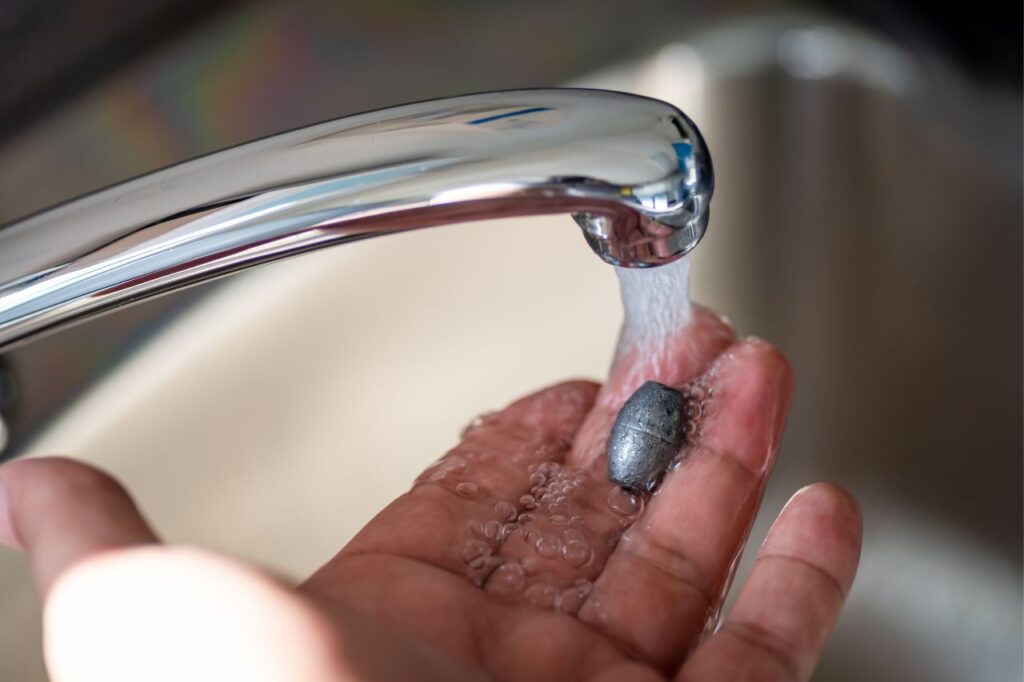
Drinking water remains a primary route of insidious domestic contamination. Even when public utility infrastructure delivers water that meets federal baseline safety thresholds, domestic distribution lines introduce hazardous chemical reactions. Water stagnation within internal plumbing allows chemical leaching to accelerate, particularly in systems with fluctuating pH, low mineral saturation, or elevated dissolved oxygen. Chemical dynamics between water and metal surfaces are comprehensively detailed in federal regulatory guidance, including the environmental frameworks outlined in the Lead and Copper Rule.
A prevalent misconception is that homes built or replumbed after the 1986 Safe Drinking Water Act amendments are entirely safe. Until federal definitions were modernized in 2014, plumbing components legally classified as “lead-free” were permitted to contain up to 8 percent lead by weight. Modernized standards capped this threshold at a weighted average of 0.25 percent across wetted surfaces, meaning millions of residential fixtures installed between 1986 and 2013 contain internal brass alloys that steadily shed contaminants into drinking and cooking supplies. Compression valves, decorative gooseneck faucets, pressure-reducing valves, and submersible well pumps frequently conceal high-percentage leaded brass alloys within their internal mechanical assemblies.
Galvanized steel pipes present an equally obscure secondary hazard. When zinc coatings were historically applied to iron pipe during hot-dip manufacturing, unrefined zinc scrap often contained substantial natural lead impurities. Decades later, as these internal coatings corrode, they release persistent pulses of heavy metal. Furthermore, galvanized interior scale acts like an adsorption sponge: if a home ever sat downstream from an ancient municipal service line, the galvanized interior scale absorbed dissolved metals for decades and continues to desorb them back into purified household water long after the public utility replaced the street-side pipe. Evaluating the safety of urban distribution systems often requires regional monitoring, such as specialized protocols like municipal water testing in Queens to establish clear baselines across aging distribution loops.
Ceramic Glazes, Porcelain Fixtures, and Culinary Leaching
The kitchen contains multiple unexpected micro-sources of heavy metals, predominantly centered on tableware, slow cookers, and antique preparation surfaces. Historically, ceramic artisans and commercial manufacturers utilized lead oxide fluxes to lower melting temperatures, enhance vitreous luster, and produce vibrant, durable decorative glazes across earthenware and stoneware vessels. While modern domestic commercial tableware is subject to stringent extractable limits under current food contact guidelines, antique dishware, artisanal market pottery, imported vintage ceramics, and family heirloom sets often harbor unvitrified surface formulations.
When acidic consumables—such as tomato-based sauces, citrus dressings, vinegar, wine, or hot coffee—contact poorly fired or micro-fissured ceramic glazes, chemical leaching accelerates dramatically. The acidic liquid breaks the silicate bonds of the glaze matrix, drawing heavy metal ions directly into the food. Similarly, antique enameled cast iron cookware, decorative pewter goblets, and vintage crystal decanters pose persistent contamination risks. Storing acidic liquors or fortified wines inside traditional lead crystal decanters for mere weeks can elevate beverage toxicity to thousands of parts per billion, directly initiating prolonged physiological lead exposure among unsuspecting consumers.
Beyond the dining table, clawfoot bathtubs and vintage porcelain bathroom sinks manufactured prior to the late twentieth century frequently feature high-content leaded vitreous enamel. As hot, slightly acidic tap water fills these basins, abrasive scouring powders wear down the surface gloss, creating a fine, bioavailable powder that deposits on children’s skin, bath toys, and washcloths.
Vinyl Plastics, Window Treatments, and Electrical Polymers
Polyvinyl chloride (PVC) and related synthetic polymers represent another overlooked domestic vector. PVC plastic is inherently unstable when exposed to ambient heat and ultraviolet (UV) radiation. To prevent premature thermal degradation, embrittlement, and discoloration, industrial manufacturers historically incorporated lead compounds—such as basic lead carbonate, lead stearate, and lead phthalate—as thermal stabilizers and plasticizers.
A classic historical example involves rigid vinyl horizontal miniblinds imported into North America prior to regulatory interventions in the late 1990s. When hung in sunlit windows, solar radiation and ambient temperature swings break down the vinyl matrix. The chemical stabilizers migrate to the plastic exterior, forming a micro-crystalline film. Subsequent handling, dusting, or airflow disperses this toxic dust into interior living areas, where it settles onto floorboards and soft furnishings. Young children crawling along window sills frequently ingest these particulates via hand-to-mouth behaviors.
Similar polymer stabilization chemistries were applied to flexible electrical wiring sheathing, heavy-duty extension cords, holiday decorative light strings, and vintage artificial holiday trees. Handling unwashed cords followed immediately by food consumption represents a confirmed vector of unintentional domestic ingestion.
Synthetic Turf, Playground Materials, and Rubber Crumb Substrates
Residential outdoor living spaces introduce additional exposure pathways that bypass indoor filtration systems. First-generation artificial turf installations and certain contemporary budget-tier synthetic grass systems incorporate pigments containing lead chromate to achieve realistic green hues and protect against solar photodegradation. Over years of thermal stress, athletic use, and weathering, synthetic turf filaments experience physical abrasion and fragmentation.
The microscopic polymer fibril fragments pulverize into an ultra-fine dust that clings to footwear, sports equipment, pet fur, and bare skin, eventually migrating indoors onto living room carpets. Similar industrial considerations apply to school district fields, athletic recreation grounds, and community centers, making institutional protocols like certified school water testing in Brooklyn essential alongside surface testing to protect children across diverse learning environments.
Similarly, recycled tire crumb rubber utilized in home playground mulch, decorative landscaping, and patio paver matrices can introduce unquantified toxic heavy metal fragments into child-accessible play zones. When high-friction activities generate fine dust outdoors, children readily transport those dangerous residues into domestic indoor settings.
Historical Soil Sinks and Tracking Vectors
Surrounding soil matrices serve as an enduring, non-degrading environmental sink. Even if a residential structure boasts brand-new siding and certified non-metallic interior surfaces, the immediate exterior perimeter often holds substantial heavy metal concentrations deposited across decades of human activity. The widespread utilization of tetraethyl lead in automotive fuels throughout the mid-twentieth century generated extensive airborne particulate emissions that settled within urban and suburban soils adjacent to roadways.
Simultaneously, exterior paint scraping, power washing, and atmospheric weathering from historical architectural maintenance create a concentrated “drip line” reservoir within the top two to six inches of soil surrounding older foundations. When children dig in garden beds, pets track dirt across entryways, or homeowners walk through landscaping without removing outdoor shoes, these stable, non-degrading soil particulates transfer directly to indoor carpets, rugs, and upholstered furniture. Vacuum cleaners lacking true sealed HEPA filtration subsequently aerosolize these microscopic particulates into the indoor breathing zone.
Empirical Diagnostic Protocols: XRF, ICP-MS, and Paint Swabs
Relying on sensory assumptions to determine heavy metal presence is fundamentally flawed. Toxic compounds are odorless, tasteless at sub-acute concentrations, and completely invisible when dispersed as airborne particulates or dissolved solutes. Homeowners must deploy validated empirical diagnostic methodologies to accurately quantify hazards within their living spaces.
At-home chemical swab tests—primarily utilizing sodium rhodizonate or sodium sulfide reagents—offer rapid qualitative screening for paint films, but they exhibit significant limitations. These chemical indicator swabs are susceptible to false positives when applied to substrates containing high concentrations of barium or iron, and they frequently yield false negatives on non-porous surfaces, glazed ceramics, or surfaces coated with modern protective clear sealants. For definitive, non-destructive surface evaluations, certified environmental inspectors utilize field-portable X-Ray Fluorescence (XRF) analyzers.
XRF instruments emit controlled gamma or X-ray radiation that excites inner-shell electrons within surface atoms. When these electrons transition, they release characteristic fluorescent X-rays that allow the analyzer’s onboard spectrometer to quantify elemental concentrations down to milligrams per square centimeter (mg/cm²) within seconds, without damaging heirloom furniture, original architectural millwork, or structural framing.
For drinking water and dissolved contaminants, laboratory-grade Inductively Coupled Plasma Mass Spectrometry (ICP-MS) remains the gold standard. Homeowners should utilize certified environmental testing laboratories rather than over-the-counter visual indicator strips. Proper empirical protocols require capturing both a “first-draw” sample—taken immediately after an intentional six-to-eight-hour stagnation window to evaluate fixture-level leaching—and a sustained “flushed” sample to evaluate the public service line and incoming infrastructure. Homeowners seeking guidance on testing parameters, diagnostic standards, and health thresholds can consult educational resources from federal entities, notably the official drinking water guidance provided through the EPA basic information on lead in drinking water.
Engineering Controls, Remediation, and Protective Housekeeping Protocols
Developing a comprehensive domestic defense strategy requires a tiered approach that combines source removal, structural containment, point-of-use engineering controls, and specialized hygiene regimens:
1. Point-of-Use Water Filtration: Standard pitcher carbon filters do not reliably remove dissolved heavy metal ions unless specifically engineered and certified. Ensure all point-of-use or whole-home filtration systems carry explicit NSF/ANSI 53 (health effects) or NSF/ANSI 58 (reverse osmosis) certifications specifically rated for heavy metal reduction. Always flush cold-water lines for several minutes prior to drawing water for consumption or infant formula, and never consume or cook with hot water drawn directly from the tap, as water heater tanks and accelerated thermal kinetics dramatically increase plumbing leaching rates.
2. Specialized HEPA Abatement Housekeeping: Conventional residential vacuum cleaners exhaust ultra-fine microscopic dust through permeable bag fibers and casing seals, actively redistributing hazardous particulates into the air. Homeowners residing in vintage properties should invest in a certified, sealed HEPA vacuum cleaner. Clean non-carpeted surfaces, window sills, and baseboards weekly using wet-wiping techniques with specialized phosphate-based heavy metal detergents or high-surfactant cleaning solutions. Never engage in dry sweeping or dry dusting across suspected areas.
3. Source Elimination of Culinary Vectors: Retire antique, imported, and heirloom decorative ceramics from active food service. Transition vintage crystal to display cabinets rather than long-term beverage storage, and replace vintage enameled cookware exhibiting crazing, micro-cracks, or base metal exposure. Avoid cooking acidic dishes in unverified artisanal earthenware slow-cooker inserts.
4. Outdoor Containment and Perimeter Soil Management: Establish robust outdoor perimeter zones by covering exposed foundation soils with thick wood mulch, dense grass turf, or crushed stone barriers to prevent track-in. Enforce a strict “no shoes indoors” household protocol, supported by high-retention walk-off floor mats at all exterior entryways. Regularly wash family pet paws after outdoor play, and cultivate edible garden vegetables exclusively in raised beds filled with certified clean, imported loam rather than native foundation soil.
Ensuring a secure, non-toxic living environment requires continuous vigilance and professional scientific verification. If your property contains vintage architecture, ambiguous plumbing configurations, or historic finishes, professional environmental inspection provides actionable clarity. To schedule comprehensive laboratory diagnostic assessments, certified home evaluations, or customized environmental consulting tailored to your residence, please connect directly with our field team via our official contact portal.