The Invisible Vector: How Renovation Dust Spreads Lead Across Residential Ecosystems
Architectural revitalization and historic brownstone restoration carry a documented, insidious hazard that standard housekeeping cannot mitigate. When structural coatings applied prior to the landmark 1978 federal ban on lead-based paint are disturbed through mechanical abrasion, demolition, or heat application, they do not merely fragment into visible rubble. Instead, they shatter into sub-micron particulate matter that acts aerodynamically as an aerosolized heavy metal toxicant. Understanding how renovation activity mobilizes this material—and establishing rigorous protocols to halt its distribution—is essential for safeguarding residential ecosystems. Organizations committed to environmental health, such as A Safe Tomorrow, emphasize that proactive containment and diagnostic evaluation represent the primary defense against systemic contamination.
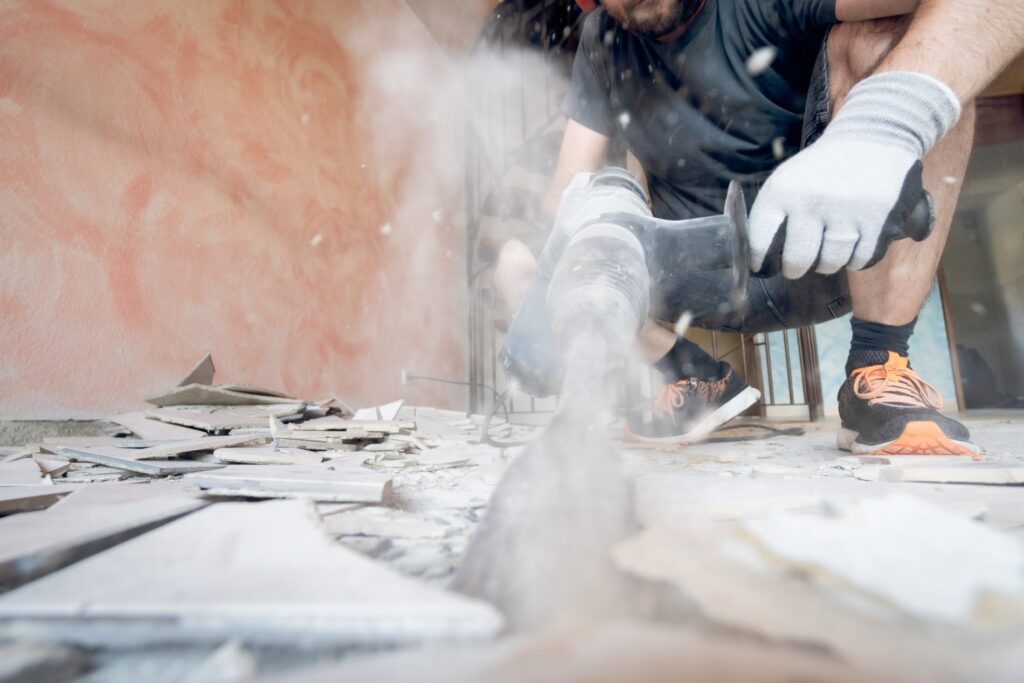
The physical behavior of lead dust deviates significantly from coarse building debris such as gypsum or sawdust. Heavy mechanical actions like sanding, dry scraping, circular sawing, and abrasive blasting pulverize legacy lead carbonate and lead chromate pigments into particles often smaller than 2.5 to 10 micrometers in aerodynamic diameter. At these microscopic scales, gravitational settling velocities are extraordinarily low. Stokes’ Law dictates that while larger fragments precipitate within seconds, sub-micron lead particles remain suspended in ambient indoor air currents for hours, allowing them to migrate through convection loops, unsealed floorboards, chase passages, and pressurized interior spaces.
Furthermore, lead particles exhibit strong electrostatic properties. Once airborne, they cling tenaciously to architectural surfaces, porous wall assemblies, upholstered fabrics, and structural framing. Routine foot traffic, vibration from ongoing power tool operations, and ordinary door closures continuously re-suspend settled lead dust, transforming transient mechanical disturbance into a persistent source of toxic exposure. Without total structural isolation, what begins as a localized bathroom remodel or window sash replacement rapidly contaminates the entire living envelope.
Biological Mechanisms and Exposure Pathways of Micronized Lead
The biological vulnerability of human systems to micronized lead dust is driven by its exceptional bioaccessibility. While solid lead paint chips must undergo prolonged gastrointestinal digestion to release elemental lead into the bloodstream, fine dust particles deposit directly within the lower respiratory tract—specifically the pulmonary alveoli. In the deep lungs, alveolar macrophages and extensive capillary networks absorb lead dust rapidly and near-completely, transferring systemic toxic heavy metals into the bloodstream without hepatic filtration.
Ingestion represents an equally devastating secondary pathway, particularly via hand-to-mouth transfer in infants and children. Settled lead dust adheres to toys, food preparation surfaces, and personal belongings. Environmental health agencies observe that contaminated dust deposited onto kitchen prep zones, culinary wares, and dishware creates direct chemical hazards; the regulatory scope detailed by the FDA on lead in food and foodwares highlights how easily toxic particulates enter domestic nutritional vectors from ambient environmental sources. Once absorbed, lead distributes into soft tissues before mimicking calcium to accumulate irreversibly in the human skeleton.
Biochemically, lead substitutes for divalent cations (predominantly calcium and zinc), disrupting cellular homeostasis, damaging the blood-brain barrier, and blocking neurotransmitter release. Clinical surveillance documented by public health authorities, including the CDC guidance on lead prevention, establishes unequivocally that there is no identified blood lead level (BLL) without deleterious health effects in children. Even microscopic exposure windows during brief home remodels can initiate irreversible neurocognitive deficits, executive function decline, and behavioral alterations.
Aerodynamic Migration Through HVAC and Mechanical Chases
The most potent pathway for house-wide lead dispersal is the heating, ventilation, and air conditioning (HVAC) infrastructure. Forced-air mechanical systems create active pressure differentials that draw contaminated air out of active renovation zones and redistribute it to distant bedrooms and common areas. Standard residential furnace filters (typically MERV 4 to MERV 8) lack the physical density required to capture fine heavy metal aerosols. Consequently, returning air pulls lead dust into the ductwork, coating the sheet metal interior with heavy metal deposits that periodically shed particles each time the blower activates for years following the renovation.
Structural convective paths compound mechanical distribution. Floor joist cavities, electrical wire penetrations, unsealed plumbing chases, and wall cavities act as interior conduits under the influence of the “stack effect.” Warm air rising through upper stories creates negative pressure at the ground level, pulling lead dust upwards through wall framing and venting it into occupied spaces above. Mitigating these pathways demands engineering controls that account for thermodynamic airflow dynamics rather than simple surface barriers.
Engineering Controls: Containment Barriers and Negative Pressure Systems
Eliminating particle transmission requires robust containment infrastructure modeled on high-containment biosafety and asbestos abatement standards. Plastic dust curtains hung with household tape are thoroughly inadequate; they fail mechanically under cross-drafts and lack the airtight seal necessary to resist micro-particulate infiltration.
Critical Containment Construction
Containment walls must be fabricated using heavy-duty, flame-retardant 6-mil polyethylene sheeting. All floor, ceiling, and wall perimeters must be anchored with mechanical tension poles and sealed continuously using commercial-grade poly-hanging tape or low-residue adhesive barriers. Where high-traffic egress is unavoidable, contractors must install an engineered two-stage or three-stage airlock featuring overlapping, zippered poly flaps weighted at the bottom to maintain positive surface tension.
Directional Airflow and HEPA Extraction
Physical poly barriers must be reinforced with directional negative air pressure. By exhausting filtered air out of the containment zone, the active work area maintains a lower barometric pressure than adjoining rooms. Consequently, if a breach occurs in the plastic barrier, clean air flows inward toward the contaminated space, preventing lead particulates from escaping outward. True negative pressure systems require true HEPA (High-Efficiency Particulate Air) filtration units certified to capture 99.97% of particles down to 0.3 micrometers. The exhaust ducting should vent directly outdoors, situated away from exterior building intake vents, operable windows, and public walkways.
Work Practices: Tool Extraction and Wet Suppression
Containment enclosures mitigate migration, but effective project planning must suppress dust generation at the mechanical point of origin. Uncontrolled power sanders, needle scalers, and open-flame burners should be rigorously prohibited on any residential structure containing vintage coatings. Instead, remediation contractors utilize source-capture engineering tools.
All mechanical rotary, oscillating, or orbital tools must incorporate integrated vacuum shrouds plumbed to an industrial HEPA extraction unit rated for lead dust remediation. Wet sanding protocols, chemical paint stripping with neutral pH matrices, and saturated misting of surfaces prior to saw cuts dampen airborne particulate formation by increasing particle mass and agglomerating micro-dust into removable slurry. Technicians working within containment must wear dedicated disposable Tyvek coveralls, boot covers, and tight-fitting elastomeric respirators equipped with NIOSH-rated P100 filter cartridges. To avoid tracking lead residue past the perimeter, workers must systematically de-gown within the intermediate airlock before entering clean zones.
Cross-Contamination Vectors: Plumbing and Water Safety
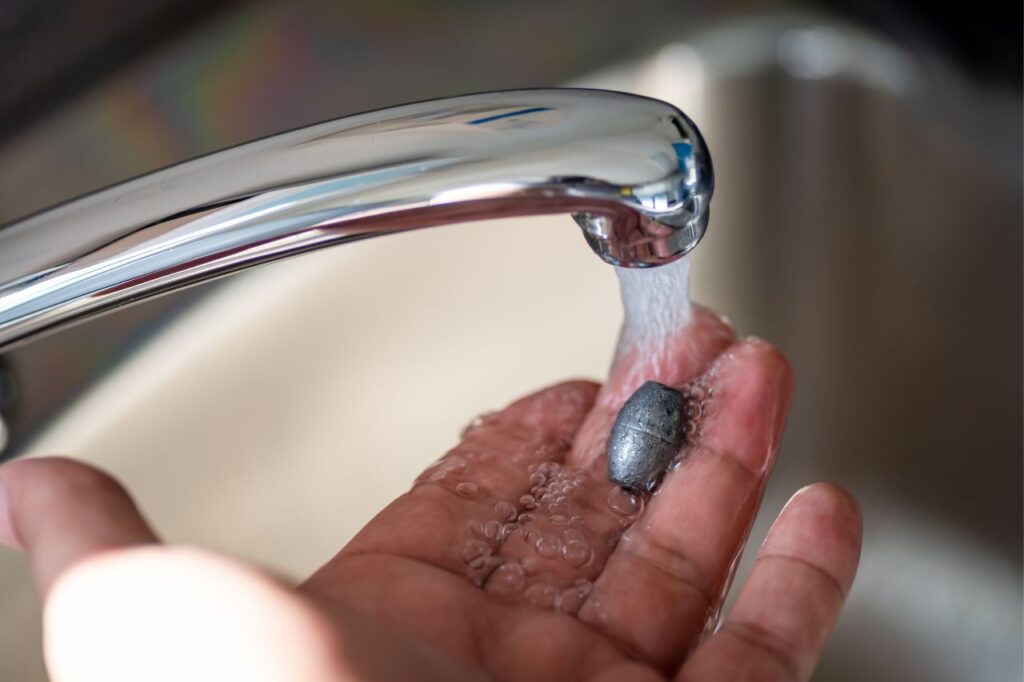
While airborne particulate management dominates containment discussions, renovations frequently stress vintage domestic plumbing networks, creating an overlapping heavy metal vector. Structural vibration from wall demolition and floor joist reinforcement transmits dynamic shockwaves directly through legacy copper, brass, and lead plumbing stacks. This physical vibration dislodges decades of protective mineral passivation scales, releasing flaked particulate lead into drinking water supplies.
Property owners overseeing high-end alterations frequently require holistic diagnostic testing to verify that building vibrations have not mobilized toxic metals into culinary lines. Engaging Manhattan on-site water testing services allows construction teams and occupants to evaluate lead concentrations at the fixture, ensuring plumbing fixtures remain safe while air containment protocols are running. Environmental health requires treating both air and water pathways as interconnected structural vulnerabilities during any major architectural overhaul.
Empirical Clearance Testing and Post-Remediation Decontamination
Demolition and surface preparation produce vast quantities of micro-particulate lead that settle across poly floor membranes. Simply packing up barriers and sweeping the area creates an immediate, catastrophic re-entrainment of fine dust throughout the residence. Decontamination must follow a strict, empirical protocol known in environmental science as the HEPA-Wet-HEPA sequence.
The process begins by vacuuming all exposed horizontal and vertical surfaces with a certified HEPA vacuum featuring a specialized beater bar or hard-surface wand. Technicians then perform comprehensive wet cleaning using specialized lead-specific chelating detergents or high-phosphate cleaning solutions (such as trisodium phosphate, TSP), which chemically bind lead ions and lift them from porous building matrices. Once dried, the entire surface envelope undergoes a final HEPA vacuuming pass to capture residual desiccated particles. Only after this triple-stage process has concluded can the primary poly containment barriers be dismantled from the ceiling downward, folded inward upon themselves to trap exterior residue, and sealed within double 6-mil poly disposal bags.
Clearance cannot be determined by visual cleanliness alone. Microscopic quantities of lead dust invisible to the naked eye can cause severe toxicological elevations. Professional environmental assessment firms collect standardized dust wipe samples across floors, interior window sills, and window troughs according to EPA or municipal clearance standards. Prior to initiating complex remediation or returning residents to the home, property owners should review diagnostic protocols and client guidelines through an environmental FAQ to align construction timelines with analytical laboratory turnaround windows.
Holistic Environmental Safety: Baseline Audits and Long-Term Protection
Protecting families, construction workers, and neighboring units demands an empirical lifecycle strategy rather than ad-hoc protective measures. Before the initial stroke of a demolition hammer or the removal of legacy trim, site managers must conduct rigorous diagnostic sampling to map hazardous paint coatings throughout the structure. Executing thorough baseline testing identifies precise lead locations, depth profiles, and substrate adhesion levels, allowing general contractors to establish targeted engineering controls long before dust can form.
Project managers, preservation architects, and homeowners seeking technical white papers, equipment certification lists, and lead-safe design checklists can explore specialized environmental health resources to integrate federal EPA Renovation, Repair, and Painting (RRP) standards into architectural specifications. By understanding the aerodynamic physics of sub-micron dust, investing in industrial negative pressure air scrubbers, enforcing point-of-source extraction, and validating results through rigorous laboratory wipe testing, property managers can modernize historic structures without compromising human health.