The Thermodynamics of Heavy Metal Leaching in Domestic Plumbing
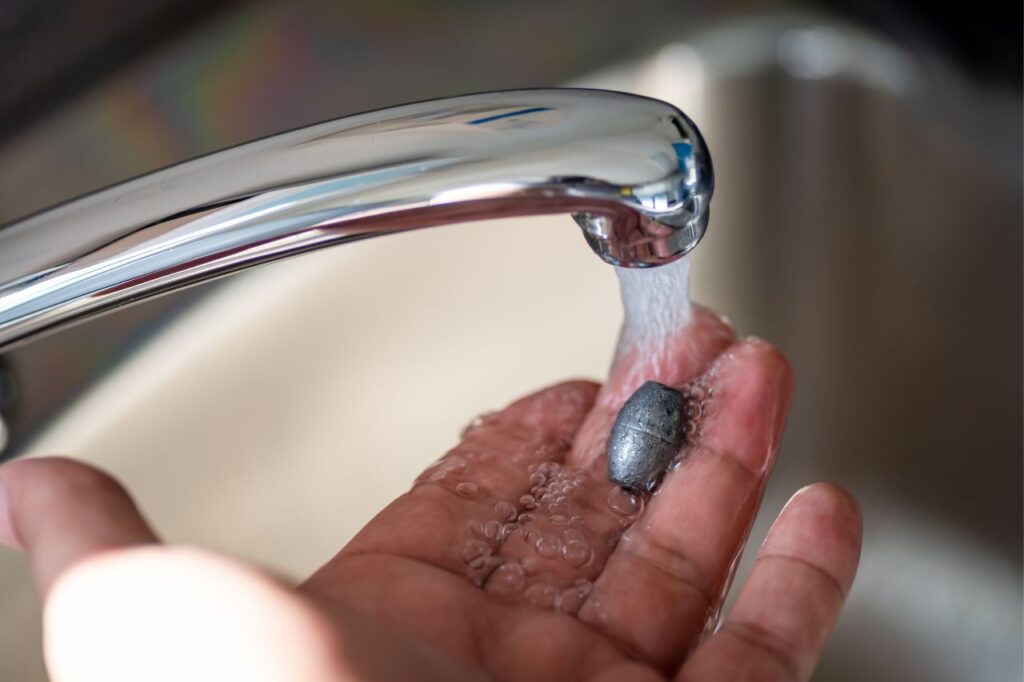
When property owners evaluate potable water quality, visual clarity and olfactory neutralness frequently create a false sense of security. Heavy metals such as lead (Pb) do not impart a discernible taste, color, or odor at concentrations capable of inducing clinical systemic harm. Among the operational variables determining heavy metal leaching in residential and commercial plumbing architectures, operational water temperature remains one of the most critical yet misunderstood determinants. Public health authorities uniformly recommend drawing water exclusively from the cold tap for drinking, cooking, and infant formula preparation, a guideline rooted deeply in transport phenomena, thermodynamic kinetics, and aqueous metallurgy.
The fundamental physical chemistry governing the differential between hot and cold tap water centers on temperature-dependent dissolution rates and chemical equilibria. Higher water temperatures accelerate the chemical kinetics that govern corrosion reactions between water and interior pipe walls. In thermodynamic terms, the rate constant of lead dissolution exhibits an exponential relationship with absolute temperature, described empirically by the Arrhenius equation. As water temperature elevates from standard ambient distribution conditions—typically 10°C to 15°C (50°F to 59°F)—to domestic water heater set points between 49°C and 60°C (120°F to 140°F), the kinetic energy of hydronium and dissolved mineral species escalates markedly. This state of increased molecular energy dramatically diminishes activation energy barriers for surface redox reactions, speeding the extraction of divalent lead ions from metallic surfaces.
Furthermore, elevated temperatures alter water chemistry balances, including the calcium carbonate precipitation equilibrium and protective passivation scales. In many municipal distribution networks, corrosion inhibitors such as orthophosphates are systematically dosed to establish insoluble lead-phosphate films (such as hydroxypyromorphite) along pipe lumina. Thermal destabilization compromises the integrity of these protective passivation barriers. Heated water exhibits a lower saturation index for certain protective complexes while simultaneously escalating the solubility of elemental lead and lead carbonates. Consequently, water sourced from hot taps routinely exhibits significantly elevated soluble lead concentrations relative to cold-water baselines across identical infrastructure networks.
Infrastructure Vulnerabilities: Historical Piping, Solder, and Fixtures
Lead rarely originates within treated municipal reservoirs; rather, it enters the potable stream via post-treatment conveyance infrastructure through contact with legacy materials. The primary physical conduits of contamination encompass full lead service lines (LSLs), leaded brass and bronze distribution components, galvanized iron piping legacy-coated with lead-bearing zinc alloys, and tin-lead solder applied to copper joints. The United States Congress banned the installation of solder containing more than 0.2% lead and pipes containing more than 8.0% lead through the 1986 Safe Drinking Water Act (SDWA) amendments, later tightening the definition of “lead-free” plumbing fixtures to a weighted average of 0.25% in 2014. Despite regulatory modernizations, millions of residential structures constructed prior to these thresholds remain heavily reliant on legacy metallic matrices.
The physical configuration of domestic hot water distribution exacerbates leaching vulnerability through prolonged hydraulic residence time. Hot water storage tanks function as thermal accumulators where water remains stagnant at elevated temperatures for extended durations—often 8 to 24 hours between heavy usage cycles. Under these sustained thermal conditions, galvanic corrosion between dissimilar metals operates uninhibited. When copper plumbing interfaces with lead-based solder or older lead pipe stubs, the galvanic couple generates an electrical potential difference that drives accelerated anodic dissolution of the lead component.
Over months and years of continuous thermal cycling, interior water heater storage tanks accumulate heavy mineral sedimentation, sediment sloughing, and corroded particulates at the base of the vessel. This sacrificial accumulation environment creates a dense sludge layer that can chemically scavenge and subsequently re-mobilize concentrated particulate lead. When hot taps are opened, the hydraulic disturbance draws water directly from this thermally active reservoir, transporting high-concentration particulate and dissolved fractions directly to the consumer tap. Understanding the multifaceted pathways of lead exposure highlights why domestic plumbing interfaces serve as primary points of toxicological vulnerability in older structural environments.
Biological Safety Mechanisms and Systemic Pharmacokinetics
The biological consequences of ingesting water-borne lead are compounded by its high gastrointestinal bioavailability, particularly in soluble ionic states characteristic of hot water leaching. Unlike organic contaminants that can undergo hepatic metabolic transformation or thermal breakdown, elemental lead cannot be degraded or deactivated by thermal processing. In fact, attempting to boil water drawn from a hot tap to eliminate microbial contamination produces the inverse of safety: water evaporates as steam, directly concentrating the non-volatile lead ions into a higher parts-per-billion (ppb) suspension.
Upon oral ingestion, divalent lead ions (Pb2+) are absorbed across the intestinal epithelium via active divalent metal transporter 1 (DMT1) pathways, directly mimicking and competing with essential calcium and iron homeostasis. According to comprehensive public health data from the Centers for Disease Control and Prevention (CDC), there is no identified blood lead level threshold without measurable deleterious effects in children. In pediatric populations, gastrointestinal absorption rates approach 40% to 50%, compared to roughly 10% to 15% in healthy adults. This marked systemic uptake occurs during critical developmental windows characterized by rapid organogenesis and synaptogenesis.
Once absorbed into the bloodstream, lead binds predominantly to erythrocyte membranes before equilibrating across soft tissues—including the kidneys, liver, and cerebral cortex—before sequestering permanently into calcified bone matrices. Within the central nervous system, lead readily traverses the immature blood-brain barrier via calcium channels. It substitutes for calcium ions within protein kinase C (PKC) complexes, disrupting neurotransmitter release, suppressing N-methyl-D-aspartate (NMDA) receptor-mediated long-term potentiation, and inducing widespread apoptotic cascades in cortical neurons. These cellular insults manifest phenotypically as permanent decrements in cognitive intelligence quotient (IQ), executive dysfunction, spatial memory impairment, and persistent behavioral dysregulation.
In adult biology, chronic low-level lead absorption drives end-organ pathology, primarily manifesting through endothelial dysfunction, accelerated hypertension, progressive renal microvascular sclerosis, and elevated all-cause cardiovascular mortality. The biological mechanisms are insidious because systemic damage develops cumulatively over decades without presenting pathognomonic symptoms until irreversible structural failure occurs.
Empirical Water Testing and Diagnostic Methodologies
Quantifying heavy metal contamination within built environments demands rigorous empirical sampling protocols rather than speculative estimates based solely on building age. Due to the complex spatial distribution of lead sources along a pipe branch, water utility and environmental diagnostics employ sequential collection methodologies to isolate specific contamination nodes. To implement an accurate assessment, building managers should work with certified lead water testing specialists for the Bronx to establish forensic profiles of lead distribution across disparate riser runs and fixture configurations.
Standard diagnostic procedures rely on first-draw and profile sampling frameworks. A standardized first-draw sample requires an unmitigated stagnation period of at least six hours, during which water remains motionless inside the fixture and internal piping runs. The initial one-liter draw measures contamination originating primarily from the immediate fixture, aerator, and adjacent interior solder joints. Consecutive second-draw, third-draw, and purge-volume samples capture water drawn progressively from internal risers, branches, and the exterior service line itself, delineating exactly which infrastructure elements require capital replacement.
To capture the true operational variation between distribution channels, certified environmental laboratories utilize Inductively Coupled Plasma Mass Spectrometry (ICP-MS) or Graphite Furnace Atomic Absorption Spectroscopy (GFAAS). Comparative thermal testing protocols require paired extractions: drawing a standardized cold-water first-draw and purge profile, followed by an equivalent thermal profile drawn from the identical terminal fixture under hot water delivery conditions. Empirical studies regularly demonstrate that hot-water samples display elevated fractions of both dissolved ionic lead and colloidal particulate lead compared to cold extractions, validating the necessity of dedicated temperature controls during baseline environmental audits.
For building managers and residents needing step-by-step guidance on regulatory thresholds, sample preservation techniques, and testing mandates, technical repositories such as environmental compliance resources offer actionable instructions on maintaining Chain of Custody (CoC) and choosing certified environmental testing laboratories.
Regulatory Frameworks and Infrastructure Standards
Water quality compliance within distribution mains is structurally distinct from quality metrics measured at the individual consumer tap. The United States Environmental Protection Agency oversees the Lead and Copper Rule (LCR), recently revised under the Lead and Copper Rule Improvements (LCRI) to mandate accelerated lead service line replacement timelines and stricter action levels. Guidance from the federal government on this topic can be found via the EPA lead safety resources, which emphasize that utility-side water chemistry management cannot universally neutralize interior structural degradation inside private properties.
Modern building codes and material certifications established by NSF International and the American National Standards Institute (ANSI) enforce explicit performance criteria for plumbing components. Specifically, NSF/ANSI Standard 61 governs drinking water system components regarding health effects, establishing strict limits on chemical extraction into potable water. In parallel, NSF/ANSI Standard 372 defines testing procedures to verify compliance with the 0.25% weighted maximum lead content requirement for wetted surfaces of pipes, fittings, and fixtures. However, standard testing protocols are conducted under standardized aqueous formulations that do not always simulate the harsh thermal and corrosive environments found inside unmaintained domestic water heaters.
Furthermore, public utilities maintain regulatory compliance by monitoring water quality parameters including pH, dissolved inorganic carbon (DIC), oxidation-reduction potential (ORP), and orthophosphate residual. When finished municipal water enters private distribution networks, variations in heating systems, galvanic couplings, and domestic water softeners can alter this delicate chemical equilibrium. Ion exchange water softeners, for example, replace divalent calcium and magnesium ions with monovalent sodium ions, reducing water hardness while frequently increasing corrosiveness toward metallic lead surfaces, particularly within hot water storage vessels.
Practical Protective Protocols and Point-of-Use Mitigation
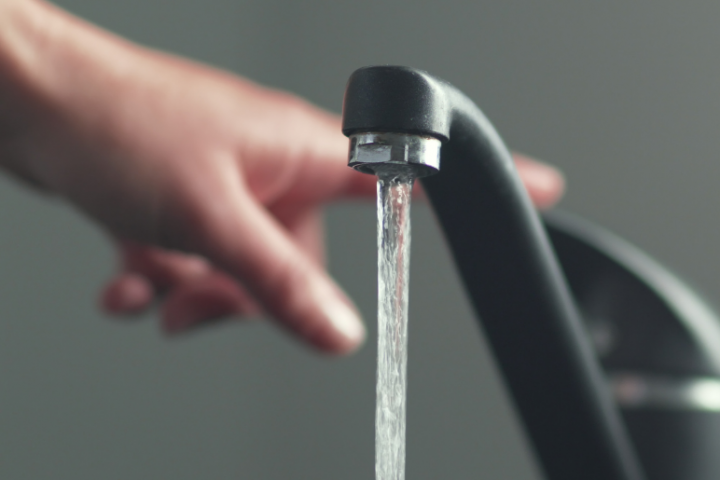
Mitigating domestic lead exposure requires establishing reliable mechanical boundaries, adherence to behavioral protocols, and the deployment of certified physical filtration systems. Given the thermodynamic realities of thermal leaching, the primary protective measure is behavioral: under no circumstances should water drawn from the hot tap be consumed, used for cooking, or utilized in reconstituting dry foodstuffs and baby formulas. Food preparation and hydration sources must be drawn strictly from the cold tap following an adequate operational purge cycle.
An effective cold-water flushing protocol requires running the tap on cold until the stream achieves a noticeable, sustained temperature drop—signaling that water residing stagnantly within internal building risers and service runs has cleared and fresh water is entering directly from the municipal main. In multi-unit residential structures or buildings containing long internal pipe lengths, this flush duration may range from one to several minutes. While operational flushing successfully mitigates dissolved baseline concentrations, it remains an interim intervention that cannot substitute for structural lead abatement and certified point-of-use (POU) filtration.
When evaluating point-of-use filtration devices, property owners must confirm third-party validation against rigorous mechanical standards. Filtration units should carry explicit certification under NSF/ANSI Standard 53 for health effects (specifically targeting soluble lead adsorption and particulate lead reduction) or NSF/ANSI Standard 58 for reverse osmosis systems. Conventional gravity-fed charcoal carafes and standard sediment filters are generally inadequate for dissolving or capturing sub-micron ionic lead species unless formulated with proprietary composite ion-exchange resins or specialized solid carbon blocks. Point-of-use filtration devices must always be connected strictly to cold water supply lines, as hot water exposure can structurally degrade carbon matrices, deactivate ion exchange resins, and cause desorption of previously captured heavy metal contaminants back into the effluent stream.
Property owners confronting unresolved questions regarding anomalous water colors, historic plumbing compliance, or certified testing logistics can review an updated environmental FAQ to clarify critical risk factors and inspection sequences. Furthermore, individuals needing personalized environmental consulting, remediation planning, or specialized laboratory dispatch services can directly contact professional environmental health engineers to develop comprehensive risk mitigation roadmaps.
Eliminating the silent hazard of domestic lead exposure demands an objective synthesis of thermodynamic principles, architectural awareness, and clinical prevention. Recognizing the distinct chemical behaviors of hot and cold tap water enables facility operators and homeowners to implement protective protocols that preserve neurological health and ensure absolute water safety across all built environments.