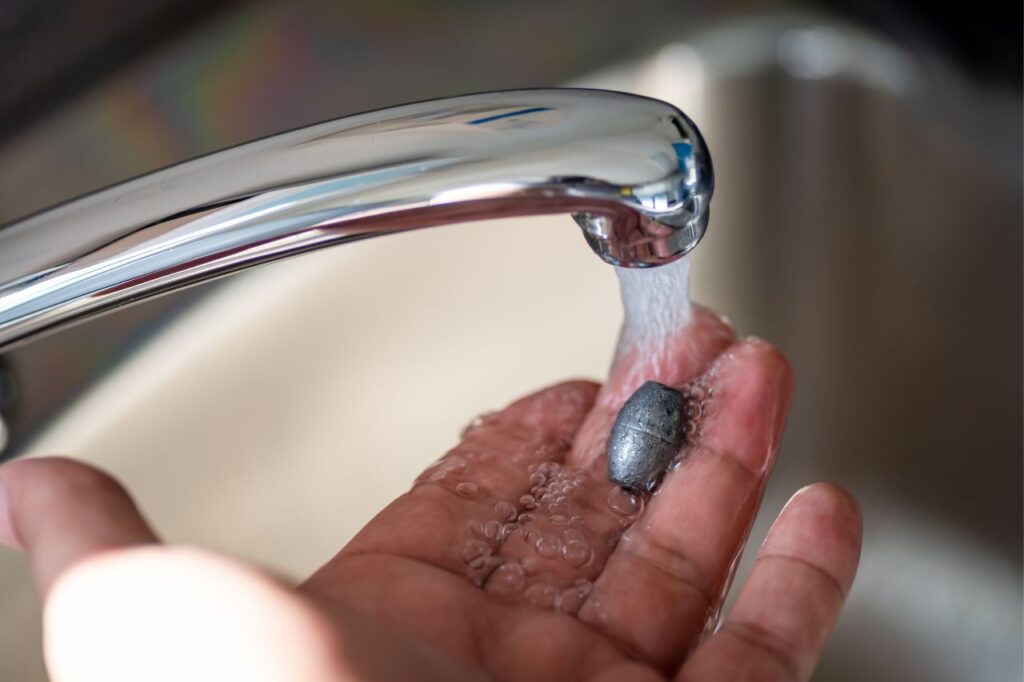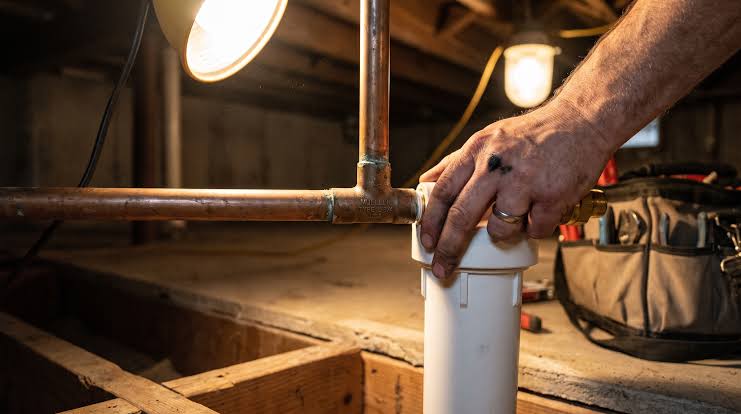
Introduction: The Silent Threat Beneath the Surface
For millions of rural and suburban households, private groundwater wells represent independence, self-reliance, and direct access to fresh water. Unlike municipal customers connected to public distribution networks, private well owners manage their own water utility. While this independence offers notable freedoms, it places the entire burden of water safety directly onto property owners. The Safe Drinking Water Act (SDWA) regulates public municipal utilities through strict testing regimes and federal treatment standards, yet it provides zero oversight or testing mandates for residential private wells. Consequently, invisible, tasteless, and odorless contaminants often evade detection until clinical symptoms manifest.
Among the myriad toxic contaminants that can compromise private groundwater, heavy metals represent the most persistent threat. Understanding lead exposure dynamics is critical for anyone managing a standalone domestic well system. While many well owners routinely evaluate their water supply for aesthetic parameters such as iron staining, sulfur odors, or calcium hardness, toxic heavy metals carry no sensory indicators. A glass of water drawn from a tap can appear crystal clear and taste clean while carrying heavy metal concentrations several orders of magnitude above safe biological thresholds.
Safeguarding domestic drinking water requires an empirical understanding of how toxic metals migrate from plumbing components, structural fixtures, and native geological deposits into household plumbing. By examining the chemical mechanisms of corrosion, physiological pathways of cellular disruption, rigorous diagnostic protocols, and targeted remediation engineering, well owners can implement resilient protective strategies that preserve family health across generations.
Geochemical Dynamics and Infrastructure Sources of Well Water Contamination
A prevalent misconception among well owners is that groundwater naturally contains high levels of heavy metals straight from the bedrock aquifer. While certain rare mineral deposits can contribute to baseline background levels, the overwhelming majority of heavy metal contamination in domestic tap water originates within the extraction, storage, and distribution infrastructure itself. Groundwater acts as an active chemical solvent that leaches heavy metals from man-made fixtures before reaching the consumer.
Historical plumbing materials serve as the primary reservoir for metal leaching. Prior to the 1986 amendments to the federal Safe Drinking Water Act, plumbing components classified as “lead-free” were legally permitted to contain up to 8 percent lead by weight. It was not until the passage of the Reduction of Lead in Drinking Water Act of 2011 (which took effect in 2014) that the legal threshold for wetted plumbing surfaces was lowered to a weighted average of 0.25 percent. Well installations dating between the 1930s and late 1980s frequently feature subterranean piping joined with 50/50 tin-lead solder, brass or bronze submersible pump impellers, galvanized steel casing joined with lead packings, and brass pressure valves containing significant metallurgical lead inclusions.
The physical leaching process is governed by the corrosive characteristics of the source aquifer. Several key water quality parameters dictate whether water will dissolve metals from well infrastructure:
- pH Levels: Acidic groundwater with a pH below 6.5 aggressively attacks metallic pipe walls, stripping away protective surface layers and accelerating ion exchange.
- Total Dissolved Solids (TDS) and Conductivity: Higher concentrations of dissolved ions increase electrical conductivity, creating galvanic corrosion cells wherever dissimilar metals make physical contact, such as copper piping joined to brass well check valves.
- Dissolved Oxygen: Aerated groundwater circulating through atmospheric storage tanks accelerates oxidative degradation of internal pipe surfaces.
- Temperature Variations: Warmer water accelerates chemical reaction kinetics, driving higher rates of metal dissolution during seasonal temperature swings.
- Water Stagnation: Prolonged stagnation allows chemical reactions to reach equilibrium, resulting in exponential increases in metal concentrations when water sits idle overnight.
Biological Safety Mechanisms and Cellular Toxicokinetics
Understanding the biological threat of toxic metals requires examining how they interact with cellular machinery. Heavy metals possess no physiological utility within human biology. Once ingested, the human body treats lead ions as biological mimics of essential divalent cations, primarily calcium, iron, and zinc. According to scientific findings published in the World Health Organization guidance on toxic metal poisoning, there is no known biologically safe threshold for human exposure, meaning even minute trace ingestion can initiate irreversible physiological damage.
At the molecular scale, lead ions (Pb2+) bind to sulfhydryl, carboxyl, and phosphate groups in functional proteins and enzymes. This competitive binding disrupts mitochondrial electron transport, impairs energy production, and generates reactive oxygen species (ROS) that induce severe cellular oxidative stress. In the neurological system, lead crosses the blood-brain barrier by masquerading as calcium ions. Once inside neural tissue, it inhibits N-methyl-D-aspartate (NMDA) receptors, halts long-term potentiation necessary for memory consolidation, and triggers spontaneous neurotransmitter release, fundamentally impairing synaptic transmission.
Over extended timeframes, systemic distribution creates complex clinical challenges. Chronic absorption patterns lead to permanent lead accumulation within calcified matrices such as cortical and trabecular bone tissue. While the biological half-life of lead in circulating blood ranges from 30 to 40 days, its half-life within human bone spans 20 to 30 years. During physiological events characterized by high bone turnover—such as pregnancy, lactation, advanced age, or hyperthyroidism—these skeletal reservoirs demineralize and mobilize stored heavy metals back into the bloodstream, creating secondary endogenous toxic crises decades after the primary water exposure occurred.
Clinical documentation indexed on MedlinePlus on toxic metal systemic risks highlights that chronic low-level intake manifests subtly across various organ systems. Renal impairment, persistent arterial hypertension, cognitive decline, peripheral neuropathies, and reduced glomerular filtration rates frequently develop without an acute poisoning episode. In pediatric populations, developmental vulnerability is particularly pronounced, resulting in irreversible drops in cognitive performance, impaired executive functioning, and persistent behavioral disorders.
Empirical Diagnostic Protocols: Testing Private Well Water
Because sensory observation cannot identify dissolved heavy metal ions, private well owners must establish rigorous empirical diagnostic protocols. Field dipsticks and colorimetric test kits sold at retail home centers lack the analytical sensitivity necessary to identify low microgram-per-liter (parts per billion, or ppb) concentrations. Protecting your household requires partnering with environmental testing laboratories certified under the National Environmental Laboratory Accreditation Program (NELAP) or state environmental protection authorities.
Accurate diagnosis relies on meticulous sample collection methodologies that differentiate between fixture corrosion and well infrastructure issues. Certified laboratories deploy advanced spectroscopy to quantify elemental concentrations, such as Inductively Coupled Plasma Mass Spectrometry (ICP-MS) and Graphite Furnace Atomic Absorption (GFAA), which achieve detection limits well below 1 ppb. Property managers looking for verified diagnostic partners frequently choose accredited lead testing services for the Bronx to obtain certified chain-of-custody documentation and precise analytical reports.
To establish an actionable diagnostic profile, well owners must collect targeted sample tiers:
- First-Draw Sampling: Collected immediately from an indoor drinking tap following a mandatory stagnation period of 6 to 8 hours with zero water usage. This sample pinpoints metal leaching occurring inside interior plumbing fixtures, terminal faucets, and localized solder joints.
- Purged Flush Sampling: Collected after running the tap at full velocity for several minutes until the water temperature stabilizes, ensuring the sample reflects water directly from the subterranean aquifer and well riser pipe. If metal levels remain elevated in this second bottle, the contamination source resides in the well pump, casing packings, or external service line.
Routine chemical surveillance should also measure broad water quality parameters, including baseline pH, total alkalinity, calcium hardness, and oxidation-reduction potential (ORP). Tracking these factors helps well owners determine their water’s Langelier Saturation Index (LSI), providing early warnings if shifting aquifer chemistry is turning their water corrosive.
Engineering and Remediation: Protective Protocols for Well Owners
When diagnostic tests confirm heavy metal contamination, well owners must implement engineered remediation strategies. Effective treatment protocols must be tailored to your water’s specific chemical composition, household consumption rates, and structural configuration. Treatment technologies fall into two primary mechanical approaches: whole-house Point-of-Entry (POE) systems and dedicated Point-of-Use (POU) installations.
For whole-house mitigation of corrosive water, neutralizing filtration systems provide a primary defense. Calcite or magnesium oxide media beds introduce calcium carbonate back into acidic water, elevating the pH above 7.0 and building a protective mineral scale that passivates metal pipe surfaces. Additionally, continuous liquid chemical feed pumps can inject NSF/ANSI Standard 60 certified orthophosphates into the mainline prior to distribution, creating microscopic passivation barriers inside copper and brass plumbing lines.
For targeted drinking and cooking water protection, Point-of-Use systems provide the highest contaminant removal efficiency. Certified filtration technologies include:
- Reverse Osmosis (RO): Multi-stage membrane systems utilize semi-permeable thin-film composite (TFC) barriers that reject divalent metal ions with removal efficiencies exceeding 98 percent. Systems must be certified under NSF/ANSI Standard 58 to guarantee rigorous contaminant reduction.
- Solid Carbon Block Extrusion: Advanced composite carbon blocks blended with selective ion-exchange resins adsorb dissolved and particulate metal species. These units require verification under NSF/ANSI Standard 53 for health-effect contaminant extraction.
- Selective Cation Ion Exchange: Regenerative media beds utilize specialized resins engineered to attract and hold positively charged metal ions while releasing harmless sodium or potassium ions.
Well owners should always consult our environmental safety blog for current updates on evolving groundwater standards, state remediation programs, and plumbing materials directives. Crucially, boiling water does not remove heavy metals; boiling evaporates clean water vapor, which actually concentrates non-volatile metal contaminants. Permanent protection requires verified mechanical filtration or total plumbing infrastructure replacement.
Proactive Management and Infrastructure Modernization
Maintaining private well water quality is an ongoing management responsibility rather than a one-time project. As infrastructure ages and regional environmental pressures shift groundwater chemistry, well owners must adopt proactive preventive maintenance schedules. The American Ground Water Trust recommends scheduling certified laboratory testing annually, or immediately following any structural well pump replacements, casing repairs, seismic shifts, or nearby construction activity.
Modernizing your infrastructure remains the definitive long-term solution. Whenever well pumps, pressure tanks, or underground distribution lines reach the end of their operational lifespan, well owners should replace them with modern, NSF/ANSI 372-compliant lead-free brass, high-density polyethylene (HDPE), or cross-linked polyethylene (PEX) piping. Eliminating legacy metallic components removes the chemical source of contamination, ensuring long-term protection against corrosive water reactions.
If your domestic well has never undergone analytical profiling, or if you are planning to purchase a rural property with private water infrastructure, schedule professional diagnostics right away. Reach out to certified professionals through our direct contact portal to arrange a comprehensive on-site environmental assessment, calibrate your filtration systems, and protect your home’s water supply with certified, laboratory-verified safety standards.