Introduction: The Vulnerability of Early Development
Welcoming an infant into your household transforms how you evaluate indoor environments. While parents routinely childproof sharp corners, install electrical outlet covers, and anchor heavy furniture, microscopic neurotoxins frequently escape notice. Among these environmental hazards, lead exposure remains one of the most persistent and insidious threats to infant health. Understanding how heavy metals infiltrate living spaces requires a clear-eyed look at residential architecture, plumbing systems, and developmental biology. For ongoing environmental health perspectives and family safety updates, exploring our educational blog provides regular insights into emerging domestic safety challenges.
A developing human body interacts with toxins far differently than an adult body. During the first twelve months of life, rapid neurogenesis, cellular differentiation, and systemic organ development occur concurrently. Environmental contaminants that cause transient or mild discomfort in fully grown adults can precipitate permanent, irreversible structural alterations in a baby’s central nervous system. Implementing a proactive first-year home safety protocol bridges the gap between passive assumptions and empirical domestic risk management.
Biological Mechanisms: Why Infants Face Heightened Vulnerability
To appreciate the urgency of rigorous containment and eradication, caregivers must examine the cellular pathways through which heavy metals disrupt immature physiology. According to scientific guidance on preventing childhood lead exposure and toxicity, there is no identified blood lead level in young children that is considered safe or without deleterious health consequences. The biological vulnerability of infants stems from three primary mechanisms: gastrointestinal absorption dynamics, molecular mimicry, and the underdevelopment of physiological barriers.
Enhanced Gastrointestinal Absorption Rates
Adult digestive systems process environmental contaminants with relative efficiency, typically absorbing only five to ten percent of ingested inorganic lead, with the remainder excreted via biological waste. In stark contrast, an infant’s gastrointestinal tract absorbs between forty and fifty percent of ingested lead. This dramatically elevated bioavailability is compounded by developmental nutritional demands: infants metabolize vital minerals at hyper-accelerated rates to support skeletal expansion and metabolic function.
Molecular Mimicry and Calcium Transporters
At the molecular level, lead operates as an elemental imposter. The divalent lead cation (Pb2+) mimics calcium (Ca2+), iron (Fe2+), and zinc (Zn2+). Calcium is the foundational signaling ion governing neurotransmitter release, synaptic plasticity, and neuromuscular communication. When lead enters systemic circulation, it competes directly for calcium channels and voltage-gated pathways, hijacking protein carriers and displacing essential minerals within cellular architecture. Instead of promoting synaptic transmission, lead activates protein kinase C aberrantly and induces apoptotic death in cortical neurons.
The Immature Blood-Brain Barrier
Throughout the first year of life, endothelial cells forming the cerebral microvasculature are still establishing dense, high-integrity tight junctions. The immature blood-brain barrier possesses elevated permeability, permitting toxic heavy metals circulating in plasma to penetrate delicate cerebral structures. Once inside cortical tissue, lead interferes with myelin formation—the lipid-rich sheath insulating neural axons—which can manifest as reduced cognitive processing speeds, behavioral dysregulation, and sensory deficits later in life.
Quarter 1 (Months 0–3): Baseline Diagnostics and Immediate Nursery Audit
During the fourth trimester, newborns are largely stationary, depending entirely on caregivers for mobility and nourishment. The immediate threat during these initial three months stems not from exploratory tactile contact, but from aerial deposition, ambient tap water, and nursery preparation projects completed during pregnancy. Establishing quantitative metrics through formal baseline environmental testing allows homeowners to diagnose latent hazards before tactile exploration begins.
Pre-Occupancy Paint and Dust Diagnostics
Homes constructed prior to the 1978 federal ban on residential lead-based paint require rigorous scrutiny. Even if walls appear flawlessly maintained, friction surfaces such as double-hung window sashes, door jambs, and baseboards generate invisible micro-particulates with everyday usage. When prospective parents sand, scrape, or renovate older surfaces without containment barriers to design a nursery, millions of toxic particles scatter into ambient air currents.
A complete audit involves deploying professional X-ray fluorescence (XRF) analyzers or certified laboratory dust wipe samplings. Standard home swab kits utilizing sodium rhodizonate or sulfide chemical reactions exhibit significant rates of false positives and negatives, making them insufficient for neonatal assurance. Verifying that horizontal surfaces—particularly nursery window sills, floor perimeters, and adjacent heating registers—register below current regulatory thresholds represents an indispensable first-quarter milestone.
Nursery Furnishing and Vintage Heirloom Scrutiny
Many families celebrate a child’s arrival by refurbishing antique cribs, rocking chairs, or wooden dressers passed down through generations. While aesthetically meaningful, vintage furnishings coated in finishes formulated before standardized consumer product limitations frequently contain hazardous concentrations of lead pigments or driers. Decorative brass hardware, ceramic drawer pulls with lead-fluxed glazes, and repainted heirlooms should be quarantined or professionally evaluated before placement in an infant sleeping area.
Quarter 2 (Months 4–6): Water Infrastructure and Nutritional Intake
Between four and six months of age, infants transition toward increased hydration intake, and many begin consuming powdered formula mixed with municipal or well water. Tap water presents a unique ingestion pathway because dissolved heavy metals cannot be detected by sight, smell, or taste. Reviewing common household questions via our curated environmental safety FAQ can help clarify the limits of conventional consumer filtration systems.
Plumbing Infrastructure: Solder, Service Lines, and Fixtures
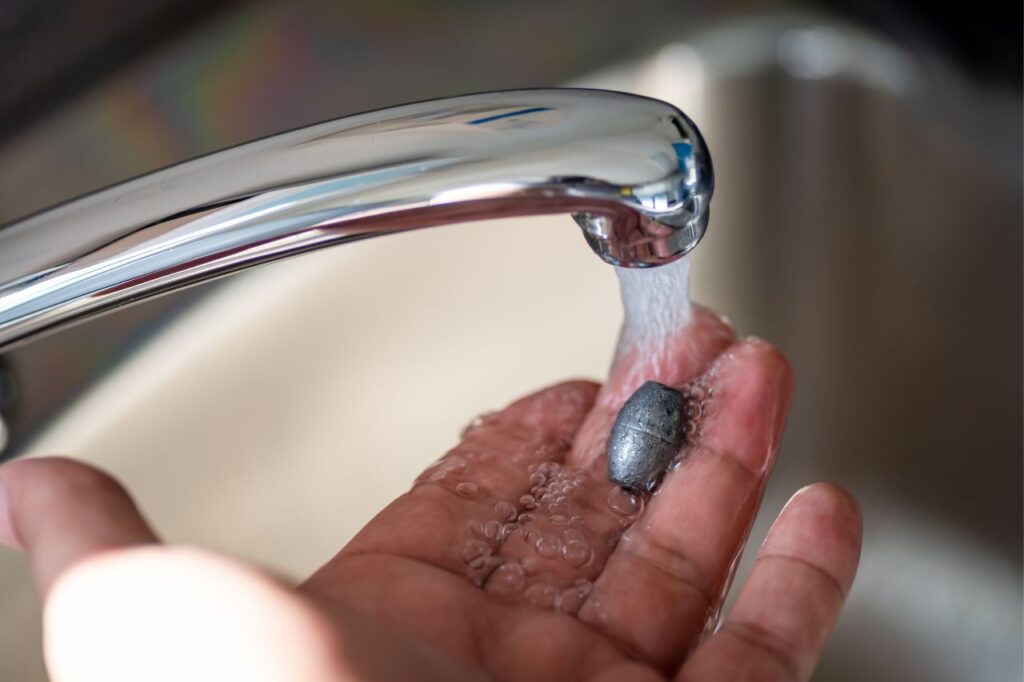
Even when municipal distribution mains comply with water quality mandates, private service laterals and internal plumbing often tell a different story. Residences built prior to 1986 routinely incorporate lead service lines, interior lead pipes, or copper plumbing joined with high-percentage lead solder. Furthermore, plumbing fixtures manufactured before 2014 were legally permitted to contain up to eight percent lead while still being branded as lead-free.
Infants fed formula reconstituted with lead-contaminated water absorb heavy doses relative to their low body mass. For families wondering who tests water for lead in Queens neighborhoods and adjacent urban areas, securing comprehensive certified laboratory drinking water analyses is crucial for validating municipal line safety. Hot water systems accelerate the leaching of metals from plumbing walls; consequently, boiling water only concentrates dissolved minerals rather than eliminating them.
Filtration Verification and Flushing Protocols
Standard pitcher filters utilizing simple activated carbon granules are generally engineered solely for chlorine, taste, and odor reduction, lacking the density to capture dissolved heavy metals. Water utilized for infant nourishment must be processed through filtration systems specifically verified under NSF/ANSI Standard 53 (health effects) or NSF/ANSI Standard 58 (reverse osmosis) for lead extraction.
Until certified filtration is operational, practice immediate risk-reduction flushing. If plumbing has remained static for six hours or more, run the cold-water tap on high for three to five minutes prior to drawing water for consumption. Always draw cold water for formula preparation, warming the bottle externally in a water bath rather than drawing pre-heated water directly from the household boiler.
Quarter 3 (Months 7–9): Mobility, Floor Dust, and Tactile Exploration
The onset of crawling, rolling, and sitting up transforms the floor into an infant’s primary habitat. Between months seven and nine, frequent hand-to-mouth behaviors peak, exposing infants directly to settled particulates and perimeter soil. Federal authorities provide actionable directives on how to identify and eliminate domestic lead hazards across multiple indoor surfaces, emphasizing dust suppression as the most critical defensive measure.
Settled Dust Dynamics and Microscopic Transfer
Household dust is not inert lint; it acts as an environmental reservoir capturing decayed exterior paint, industrial atmospheric fallout, and legacy soil tracked indoors on footwear. Friction surfaces continuously generate fine, invisible particulates that settle onto carpets, area rugs, and hardwood joints. An infant crawling across these surfaces creates electrostatic friction, gathering dust on palms and fingers that immediately enter the oral cavity during typical hand exploration.
Dry sweeping and conventional dusting methods are strictly contraindicated, as dry wiping disperses fine particulate matter into the breathing zone where it remains suspended for hours. Caregivers must adopt specialized wet-cleaning protocols to achieve meaningful decontamination:
1. Two-Bucket Wet Wiping: Clean window sills, baseboards, and uncarpeted floors weekly using disposable microfiber cloths saturated with high-phosphate or specialized lead-specific cleaning detergents. Use one bucket for detergent solution and a separate bucket for clean rinse water to avoid cross-contaminating treated surfaces.
2. True HEPA Vacuum Filtration: Standard home vacuum cleaners capture coarse pet hair and debris while expelling sub-micron dust back into indoor air. Only vacuums certified with true High-Efficiency Particulate Air (HEPA) systems—featuring sealed gaskets that capture 99.97% of particles down to 0.3 microns—should be operated around crawling infants.
3. Clean Entryway Enforcements: Implement a mandatory shoe-free household policy. Placing high-tack walk-off mats at exterior entryways captures urban soil containing exterior automotive emissions and weathered architectural debris before it tracks into infant play zones.
Quarter 4 (Months 10–12): Oral Fixation, Window Sills, and Teething Risks
As infants pull themselves up to stand and traverse furniture, their vertical reach expands dramatically. Simultaneously, the emergence of primary incisors drives intense oral fixation and teething behavior. Objects and surfaces that were previously out of reach suddenly become chewing surfaces, elevating ingestion hazards from microscopic dust to dense paint matrix chips.
Window Sills and Low Structural Trim
Window sills are prime targets for standing infants eager to look outdoors. In older construction, window stools and aprons frequently harbor layers of legacy lead enamel beneath modern latex coatings. When teething infants gnaw directly on painted woodwork, their teeth can easily penetrate softer outer latex films, liberating the underlying legacy coats. Swallowing a single paint chip the size of a fingernail can deliver tens of thousands of micrograms of lead—far exceeding safe physiological clearance limits.
Inspect all accessible surfaces within a four-foot elevation from the floor. Where friction or tooth marks are evident, install temporary non-toxic protective guards, plexiglass shields, or heavy-duty food-grade silicone channel covers over horizontal edges. Access our complete environmental archive of downloadable household protection guides to systematically audit common high-risk teething surfaces across older residential architecture.
Toy Safety, Imported Cookware, and Incidental Exposures
Risks are not limited exclusively to architectural elements. In the late infancy stage, dietary menus broaden to include family meals, finger foods, and extensive interaction with plastic and wooden play items. Parents must maintain vigilance regarding non-structural exposure vectors:
Traditional Ceramic and Glazed Cookware: Artisanal earthenware, hand-painted ceramic mugs, and imported tagines or bean pots frequently employ lead glazes fired at low temperatures. Acidic foods such as tomato sauces, citrus juices, or yogurt leach heavy metals into meals within minutes of preparation or storage.
Imported Spices and Cosmetic Preparations: Routine global regulatory testing repeatedly detects lead adulteration in imported spices, including turmeric, chili powder, and kohl or kajal eye cosmetics. Obtain pantry items exclusively from regulated supply chains that enforce rigorous heavy metal testing standards.
Secondhand and Imported Plastic Toys: Plastics manufactured prior to modern regulatory standards often utilized lead compounds as thermal stabilizers or pigment enhancers. Ensure that plastic toys, teething rings, and painted wooden play sets comply with current Consumer Product Safety Commission standards.
Conclusion: Building a Resilient, Lifetime Protective Standard
Protecting your infant from environmental neurotoxins does not require continuous anxiety; it demands systematic awareness, empirical diagnostic validation, and consistent domestic protocols. By addressing air quality, nursery integrity, water filtration, floor hygiene, and teething hazards across every quarter of your child’s first year, you establish an indoor environment where development can unfold unimpeded.
Transforming your living space into a verified safe environment represents one of the most consequential investments you can make in your infant’s cognitive and physical future. Pair diligent domestic sanitation with standard clinical pediatric blood screenings at their nine- and twelve-month checkups. Combining proactive physical containment with continuous parental education creates an enduring safeguard, shielding your growing family from preventable environmental risks.