Introduction: The Overlooked Vulnerability in Our Living Spaces
When environmental health specialists discuss legacy heavy metal contamination in domestic environments, conversations routinely focus on human pediatric health. However, companion animals share the identical built environments, consume from the same municipal water infrastructure, and frequent the ground-level surfaces where hazardous particulates accumulate. Exploring Pets and Lead: Can Your Home’s Lead Affect Animals Too? requires a comprehensive examination of toxicokinetics, architectural transmission vectors, and empirical assessment standards. Domestic animals—most notably dogs, cats, avian companions, and small mammals—are acutely vulnerable to toxic heavy metals, frequently exhibiting physiological vulnerability long before clinical abnormalities are detected in adult human residents.
Lead (plumbum, Pb) serves no known biochemical function in animal physiology. Instead, it mimics divalent cations, disrupting cellular homeostasis, neurotransmission, and enzymatic cascades across multiple organ systems. Because pets engage in continuous grooming, floor-level exploration, pica behaviors, and unfiltered tap water consumption, their risk of toxic exposure is significantly amplified. Organizations like A Safe Tomorrow emphasize that a holistic approach to residential environmental quality must evaluate animal cohabitants as critical ecological sentinels within modern living spaces.
Toxicokinetics: Biological Safety Mechanisms and Metal Toxicity in Animals
The physiological pathways through which lead affects domestic pets parallel human pathways in cellular pathology, yet diverge substantially in rate and clinical presentation. Upon ingestion or inhalation, plumbic compounds undergo solubilization in gastrointestinal fluids or alveolar spaces. Because the divalent lead cation ($Pb^{2+}$) shares structural and ionic properties with calcium ($Ca^{2+}$), iron ($Fe^{2+}$), and zinc ($Zn^{2+}$), it readily displaces these essential physiological minerals across transmembrane transport proteins.
In the gastrointestinal tract, enterocytes mistakenly transport lead through divalent metal transporter 1 (DMT1) pathways. This mechanism becomes pronounced in young animals or pets experiencing nutritional deficiencies in dietary iron or calcium, where DMT1 expression is upregulated. Once inside systemic circulation, over ninety percent of circulating lead binds directly to erythrocytes—specifically within hemoglobin and delta-aminolevulinic acid dehydratase (ALAD). This molecular disruption inhibits heme biosynthesis, contributing to microcytic hypochromic anemia, basophilic stippling, and nucleated red blood cell proliferation.
Crossing the blood-brain barrier poses severe risks to canines and felines. $Pb^{2+}$ substitutes for calcium in protein kinase C activation and calmodulin-dependent pathways, destabilizing synaptic transmissions and triggering spontaneous neurotransmitter release. Pets suffering from neurotoxicity exhibit altered behavior, ataxia, idiopathic vocalization, persistent blindness, and intractable seizures. Chronic low-level intake drives severe lead accumulation across trabecular and cortical bone compartments, where the skeletal matrix acts as an endogenous reservoir that continuously leaches heavy metals during physiological stress, pregnancy, lactation, or metabolic illness.
Species-Specific Vulnerabilities: Dogs, Cats, and Birds
Vulnerability profiles differ markedly across companion species due to anatomical differences, behavior, and metabolic clearance pathways:
Canine Vulnerability: Canines frequently encounter toxic metals via oral ingestion of paint chips, chewed architectural moldings, contaminated soil, or contaminated water sources. Their instinct to chew objects exposes them to legacy paint layers beneath modern finishes. Canines also exhibit gastrointestinal symptoms, including projectile emesis, abdominal cramping (“lead colic”), anorexia, and severe constipation alternating with diarrhea, before overt neurologic decompensation occurs.
Feline Sensitivity: Domestic felines exhibit distinct exposure mechanics dominated by mutual and self-grooming behaviors. Microscopic lead particles settled on furniture, rugs, and fur coats are methodically ingested during grooming routines. Furthermore, felines display lower systemic thresholds for oxidative cellular stress due to unique hepatic glucuronidation deficits. Clinical signs in cats frequently manifest subtly, including lethargy, rapid weight loss, renal strain, and neurological depression, rather than the overt agitation frequently observed in dogs.
Avian and Exotic Pet Risks: Psittacine birds (parrots, parakeets, cockatiels) possess an acute susceptibility to plumbing components, curtain weights, and antique cage wiring. In avian anatomy, ingested metal particles lodge within the muscular ventriculus (gizzard), where acidic digestive fluids grind and rapidly solubilize lead salts. Severe depression, crop stasis, green biliverdin-stained urates, and acute mortality frequently occur within forty-eight hours of ingestion.
Infrastructure Vectors: How Residential Buildings Expose Companion Animals
Veterinary toxicologists identify three primary exposure vectors within residential structures: degrading paint systems, contaminated municipal and well plumbing infrastructure, and outdoor environmental deposition carried into the domicile.
Properties constructed prior to 1978 present high hazards via deteriorating lead-based paint and the resulting friction dust. Microscopic dust settles along floor surfaces, baseboards, and window aprons—zones where domestic pets sleep, walk, and breathe. Paws and fur readily collect these electrostatic residues, converting grooming habits into persistent ingestion cycles. Remodeling, window replacement, and surface scraping lacking containment spread fine particulate matter throughout duct systems, drastically elevating ambient atmospheric concentrations.
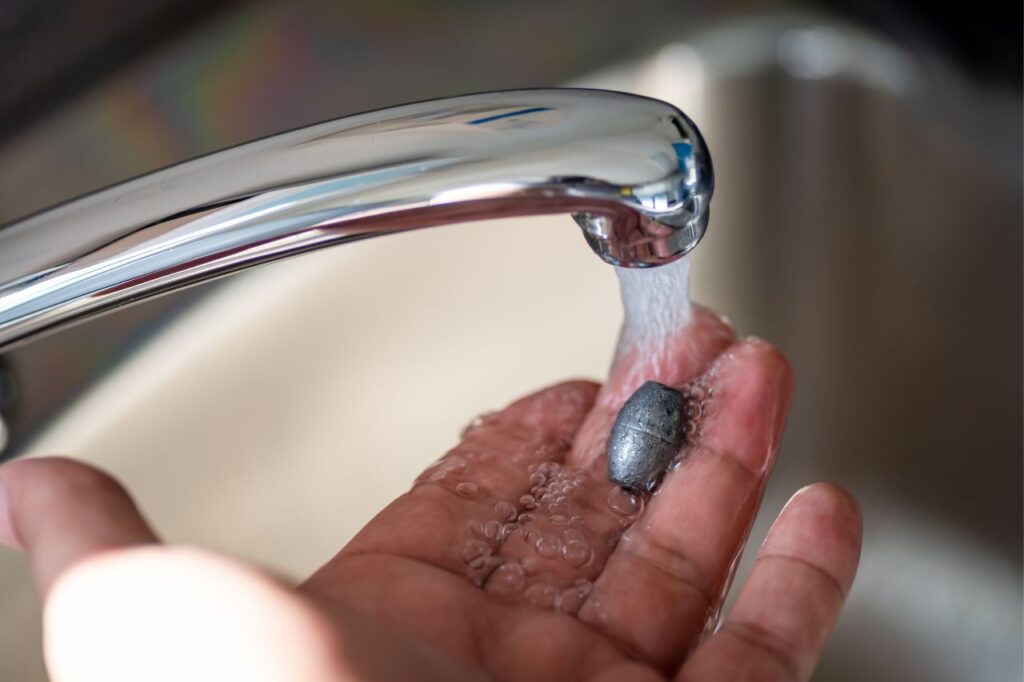
Plumbing infrastructure represents an equally insidious route. Domestic water lines, brass fixtures, galvanized plumbing, and lead solder installed prior to modern regulatory bans leach toxic elements directly into pet bowls. While municipal water treatment systems must adhere to strict Federal requirements established under the Safe Drinking Water Act, chemical reactions in private supply pipes often release heavy metals at localized residential taps. Lead levels fluctuate significantly based on pipe corrosion, water stagnation times, and temperature variations.
Municipal testing standards, industrial monitoring, and high-precision assessments such as hospital lead water testing for Manhattan medical centers illustrate the rigorous analytical controls required to identify and mitigate trace plumbic contaminants in complex plumbing infrastructures. Applying comparable empirical scrutiny within residential domiciles is vital to prevent chronic toxicity in vulnerable animals consuming standing water daily.
Homeowners should regularly review utility documentation, including municipal water distribution disclosures and the annual Consumer Confidence Report, to comprehend baseline regional water parameters, dissolved mineral content, and municipal pipe characteristics. However, utility reports only gauge source distribution networks, making on-site point-of-use testing critical to verify residential safety.
Diagnostic Methodologies: Empirical Testing and Veterinary Analysis
Confirming lead exposure in animals necessitates empirical laboratory diagnostics rather than subjective symptomatic evaluations, as clinical symptoms mimic common conditions such as epilepsy, pancreatitis, and foreign body obstructions.
The definitive clinical gold standard is venous Whole Blood Lead Level (BLL) analysis, executed via Inductively Coupled Plasma Mass Spectrometry (ICP-MS) or graphite furnace atomic absorption spectrophotometry (GFAAS). Samples collected in potassium-EDTA vacuum tubes measure systemic circulating lead concentrations. While human pediatric standards establish intervention benchmarks around 3.5 micrograms per deciliter (μg/dL), many veterinary laboratories consider any confirmed level above 5 to 10 μg/dL abnormal in companion animals, with clinical toxicity commonly emerging beyond 20 to 35 μg/dL.
Secondary diagnostic modalities include complete blood counts (CBC) evaluating erythrocyte morphology for basophilic stippling, alongside serum biochemistry panels to monitor secondary renal and hepatic functional impairment. Radiographic imaging of the digestive tract remains instrumental in pinpointing discrete metallic foreign bodies within the stomach or intestinal tract. Fluoroscopic and digital x-ray assessments can detect minute paint chips or metallic fragments, identifying the physical presence of toxic materials before systemic absorption progresses further.
Architectural Mitigation and Environmental Safety Standards
Mitigating domestic environmental hazards requires methodical, structured interventions that eliminate toxic vectors without spreading fine dust through living quarters. Property managers and animal owners must implement rigorous environmental testing protocols before initiating remedial construction.
Certified assessors utilize X-ray Fluorescence (XRF) analyzers to determine exact lead concentrations across paint substrates without causing structural damage. Paint layers exhibiting concentrations equal to or exceeding 1.0 milligram per square centimeter ($1.0\text{ mg/cm}^2$) require immediate stabilization. Routine laboratory dust wipe tests using quantitative graphite furnace analysis measure localized surface dust loadings, ensuring floor levels remain well below hazardous safety thresholds. Additional technical references and detailed safety protocols are available through environmental health educational resources.
Plumbing remediation focuses on point-of-use filtration and targeted infrastructure replacement. Standard particulate filters cannot capture dissolved divalent metal ions. Homeowners should install systems verified under NSF/ANSI Standard 53 for health effects (dissolved lead reduction) or NSF/ANSI Standard 58 for reverse osmosis purification. Ensuring drinking water passes through certified filtration systems before filling pet water bowls effectively prevents plumbing-derived heavy metal exposure.
Emergency Protocols and Veterinary Management for Lead Toxicity
Suspected acute lead ingestion requires immediate, structured veterinary intervention to stop metal absorption and prevent irreversible neurological damage. The primary clinical objective is removing residual toxic material from the gastrointestinal system before systemic circulation occurs.
If radiography confirms metallic objects or paint chips within the stomach, veterinary teams may perform gastric lavage, induce emesis under medical supervision, or execute endoscopic retrieval. In severe cases involving small fragments lodged deep in intestinal folds, whole-bowel irrigation using balanced polyethylene glycol solutions accelerates excretion.
Systemic toxicosis requires chelation therapy to bind circulating and soft-tissue lead ions into inert, water-soluble complexes excreted via the kidneys. Standard veterinary chelation protocols include:
Succimer (DMSA): Meso-2,3-dimercaptosuccinic acid represents the preferred oral chelator in companion animals. Highly selective for heavy metals, it provides lower renal toxicity profiles compared to older alternatives and avoids depleting essential trace minerals like zinc and iron.
Calcium Disodium EDTA ($CaNa_2EDTA$): Administered via slow subcutaneous or intravenous infusions, this compound aggressively binds extracellular lead ions. Clinicians must strictly avoid standard disodium EDTA, which triggers life-threatening hypocalcemia. Hydration levels and renal biomarkers require continuous monitoring throughout intravenous therapy to prevent acute tubular necrosis.
Veterinary teams administer supportive therapies concurrently, including anticonvulsant medications (levetiracetam, phenobarbital) for seizure control, neuroprotective antioxidants, and gastrointestinal protectants. Animals undergoing chelation must be quarantined from contaminated environments, as continuous exposure during chelation therapy can elevate gastrointestinal absorption rates.
Practical Protective Protocols: Safeguarding Companion Animals
Preventing toxic metal poisoning in companion animals requires disciplined cleaning routines, strategic architectural management, and vigilance regarding outdoor exposure risks. Pet owners can eliminate environmental hazards by adopting comprehensive safety protocols:
Implement HEPA Vacuuming and Wet-Cleaning Regimens: Standard vacuums expel fine microscopic lead dust back into living spaces. Use vacuums equipped with certified High-Efficiency Particulate Air (HEPA) filters, followed by wet-mopping using specialized trisodium phosphate (TSP) or lead-specific cleaning solutions on baseboards, window sills, and uncarpeted floors.
Maintain Physical Barriers on Architectural Friction Points: Window sashes and vintage doors generate toxic friction dust through daily operation. Seal, stabilize, or encapsulate painted surfaces, and prevent pets from gnawing on antique furniture, structural sills, or weathered trim.
Enforce Stringent Water Safety and Testing: Never give pets warm or hot tap water, as high temperatures dissolve pipe metals more rapidly. Flush plumbing lines thoroughly by running cold water for two minutes prior to bowl filling, or supply exclusively filtered water meeting NSF/ANSI 53 or 58 standards.
Establish Entryway Decontamination Zones: Exterior soils near busy roadways or vintage building foundations frequently retain heavy deposits of historic leaded gasoline emissions and paint fallout. Clean canine paws after walks, remove footwear at exterior entryways, and cover contaminated bare soil in yards with fresh mulch, clean sod, or raised pet-safe garden turf.
Schedule Diagnostic Evaluations: In older residential properties undergoing renovation, request baseline blood lead screenings during annual veterinary wellness examinations, particularly if pets exhibit recurrent digestive issues or behavioral shifts.
For structured assessments, localized residential inspections, or professional guidance regarding environmental contamination risks, pet owners can directly contact our environmental team to secure their homes against heavy metal hazards and safeguard the health of every resident.