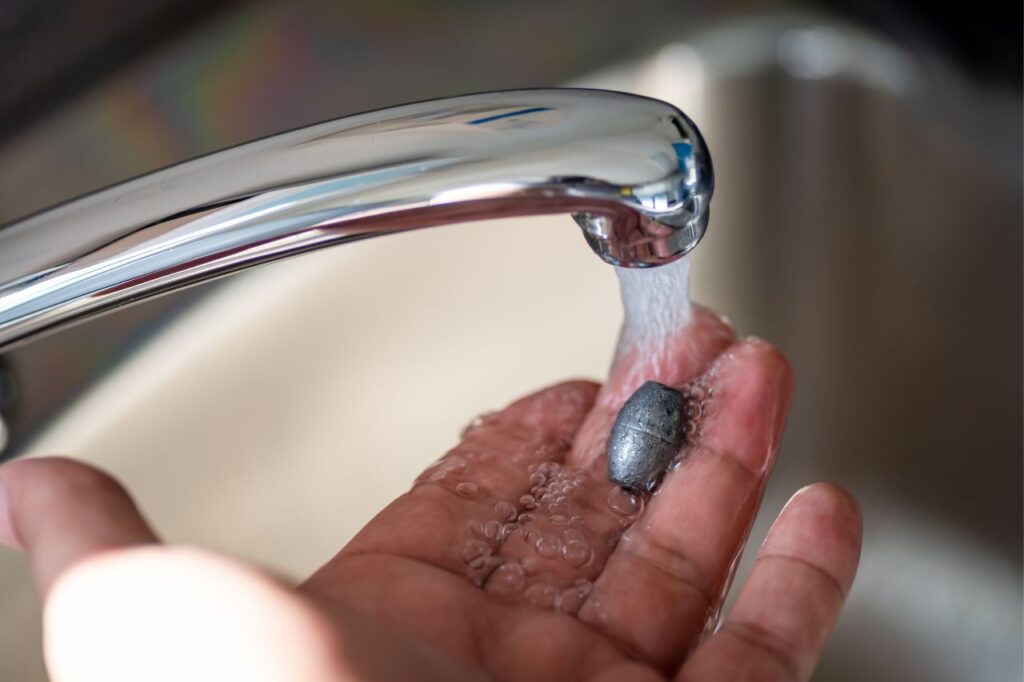
The Critical Need for Lead Prevention in Infant Nutrition
Providing optimal nutrition during an infant’s first twelve months is essential for healthy physical growth and neurodevelopment. For families relying on powdered or concentrated infant formula, tap water constitutes up to 85 percent of the prepared mixture by volume. Consequently, the chemical integrity of the domestic water supply directly determines the child’s daily nutritional exposure. Among municipal and private water contaminants, lead (Pb) represents an insidious neurotoxin with zero physiological benefit. Establishing protocols to guarantee safe environmental standards inside the home begins with understanding how municipal water enters the infant’s feeding bottle.
Infants and young children are exceptionally susceptible to heavy metal toxicity compared to adults. Their developing physiological systems process environmental chemicals differently, creating disproportionate biological burdens from equal concentrations of exposure. Because commercial infant formula relies on clean reconstituted fluids, even low-level concentrations of lead in residential plumbing can quickly accumulate into dangerous blood levels. Preventing infantile heavy metal exposure requires an evidence-based approach spanning human physiology, water distribution infrastructure, empirical testing methodologies, and defensive preparation strategies.
Biological Susceptibility: How Heavy Metals Impact Developing Infants
The physiological vulnerability of infants to ingested lead stems from key developmental differences in gastrointestinal absorption, body mass distribution, and organ maturation. While a healthy adult typically absorbs 10 to 15 percent of ingested waterborne lead through the gastrointestinal tract, infants can absorb up to 50 percent of the same intake. This high absorption rate is exacerbated by immature intestinal barriers and high calcium transport activity, where divalent lead ions (Pb²⁺) hijack standard nutrient transport pathways meant for essential dietary minerals such as calcium, zinc, and iron.
Once inside systemic circulation, lead bypasses immature defenses. The blood-brain barrier in infants remains porous throughout early development, allowing neurotoxic ions to penetrate the central nervous system. Lead disrupts fundamental neural processes, including cellular synaptogenesis, myelin sheath formation, and neurotransmitter release by displacing calcium in second-messenger cascades. According to public health data on childhood health risks and developmental impacts, there is no identified threshold of blood lead concentration that is considered safe for young children. Even micro-concentrations can precipitate irreversible cognitive deficits, reduced executive functioning, decreased attention span, and long-term behavioral disruptions.
Furthermore, an infant’s caloric and fluid intake per pound of body weight is significantly higher than that of an adult. An infant consuming formula consumes multiple ounces of reconstituted liquid per kilogram of body weight each day. This biological intake ratio magnifies any contaminant present in the tap, transforming what municipal authorities might consider a nominal trace concentration into an acute metabolic challenge for a newborn.
Infrastructure Vulnerabilities: How Lead Enters Domestic Tap Water
Lead rarely originates within natural source reservoirs or modern municipal treatment facilities. Instead, contamination occurs within distribution networks and building plumbing. Water exiting a treatment facility is frequently neutral or conditioned with corrosion inhibitors. However, as it traverses public mains, service laterals, and private interior pipes, its chemical stability can alter, causing physical degradation of legacy metals.
The primary vector of high-concentration domestic lead exposure is the lead service line (LSL)—the pipe connecting the municipal water main beneath the street to an individual property. While federal regulations in the United States banned the installation of new lead piping in 1986, millions of legacy lines remain buried nationwide. Beyond service lines, properties built prior to 2014 frequently contain plumbing fixtures, interior solder, and brass valves containing notable quantities of lead. Prior to the reduction of allowable lead content to 0.25 percent weighted average across wetted surfaces, residential brass and bronze fixtures could contain up to 8 percent lead by weight.
Galvanized iron piping also acts as a secondary reservoir. When upstream lead pipes corrode, particulate lead binds to the interior zinc and iron rust scales inside galvanized pipes. Decades later, mechanical vibrations, temperature shifts, or fluctuations in water chemistry cause these lead-bearing scales to slough off, releasing spikes of particulate contamination into the home’s water stream. Managing these diverse infrastructure vectors requires learning to identify and mitigate indoor contamination pathways throughout the household.
Empirical Water Testing: Laboratory Diagnostics vs. In-Home Kits
Because lead is completely odorless, colorless, and tasteless in drinking water, sensory evaluation cannot detect contamination. The only valid method to establish water safety before preparing formula is rigorous empirical testing. Household water sampling typically categorizes lead into two primary forms: dissolved lead, which exists in chemical solution, and particulate lead, which consists of tiny suspended metallic or mineral fragments. Comprehensive laboratory profiling must quantify both forms.
Over-the-counter colorimetric strip tests are fundamentally insufficient for safeguarding infant health. These retail test strips carry high detection thresholds, often missing concentrations below 15 parts per billion (ppb). Given that infant health risks emerge at sub-ppb levels, visual strips generate dangerous false senses of security. Certified laboratory analysis using Inductively Coupled Plasma Mass Spectrometry (ICP-MS) or Graphite Furnace Atomic Absorption Spectrometry (GFAAS) remains the professional benchmark, capable of identifying heavy metal concentrations down to fractions of a single part per billion.
Obtaining an accurate picture of residential water safety demands an established diagnostic approach, such as comprehensive systematic baseline evaluation that tracks both stagnant stagnation water and active service line draw. A standard protocol includes collecting a “first-draw” sample—water that has sat unmoving inside the interior pipes for at least six to eight hours—to quantify leaching from interior fixtures. Subsequent samples gathered after two minutes of sustained flushing measure the quality of water drawn from the outdoor service line and municipal main.
Environmental testing principles apply across multiple property types. Large-scale infrastructure often exhibits parallel plumbing dynamics, whether dealing with a multi-family residence or assessing office building water testing in the Bronx to ensure workplace drinking water safety for nursing parents. In any facility, diagnostic testing identifies which pipe runs, fittings, or supply lines pose the primary corrosion risks.
Filtration Technologies and Engineering Standards
When laboratory diagnostics identify lead in domestic tap water, or when legacy service lines cannot be immediately extracted, mechanical filtration serves as a vital point-of-use barrier. However, not all water filtration systems remove heavy metals. Conventional pitcher filters designed primarily for aesthetic taste improvement and chlorine reduction frequently fail to capture dissolved or particulate lead.
Point-of-use filtration devices should be certified by independent verification agencies, such as NSF International, under rigorous mechanical benchmarks. Two primary performance certifications govern lead remediation: NSF/ANSI Standard 53 for health effects via active filtration media (such as specialized carbon blocks and ion-exchange resins), and NSF/ANSI Standard 58 for point-of-use reverse osmosis (RO) systems. To obtain certification for lead reduction, a filtration system must prove its ability to reduce influent lead levels from elevated test spikes down to 5 ppb or lower across its rated lifespan.
Reverse osmosis systems combine multi-stage activated carbon pre-filtration with a semipermeable thin-film composite membrane. The membrane pores, measuring roughly 0.0001 microns, physically reject dissolved multivalent ions, including divalent lead, while washing waste brine down the drain. For residential applications where under-sink RO units cannot be installed, certified multi-stage solid carbon block filters infused with selective ion-exchange binders provide an effective countertop or faucet-mounted alternative. Reviewing technical answers on mitigation methods helps homeowners evaluate the maintenance cadence required to prevent filter media saturation.
Critical Hazards to Avoid: Boiling and Water Softening
One of the most dangerous misconceptions regarding infant formula preparation involves boiling water to remove chemical impurities. While boiling is an effective protocol for neutralizing biological pathogens, such as bacteria, protozoa, and viruses, it has the exact opposite effect on heavy metals. Lead is a non-volatile elemental metal with a boiling point far exceeding domestic temperatures.
When a caregiver boils lead-contaminated water, the liquid steam evaporates away while all the metal remains in the vessel. Prolonged boiling actively reduces the total liquid volume, thereby increasing the concentration of lead per fluid ounce. Consequently, formula prepared using boiled, unmonitored tap water exposes the infant to a more concentrated dose of toxic ions than using unboiled water from the same source. Parents must always ensure that water intended for infant feeding is chemically purified and filtered prior to any temperature alterations required for microbial safety.
Similarly, whole-house ion-exchange water softeners must not be treated as lead removal systems. Standard water softeners are designed solely to swap calcium and magnesium ions for sodium or potassium ions to mitigate hard-water scale on appliances. Softeners are not engineered nor certified to strip toxic heavy metals from the water column. In fact, softened water can exhibit higher corrosivity, accelerating the leaching of lead from downstream solder and brass plumbing inside the home.
Practical Safe Water Preparation Protocols for Formula
Protecting an infant from waterborne lead requires establishing consistent, daily preparation protocols within the household. Caregivers can minimize exposure risks through a combination of engineering controls, behavioral habits, and alternative clean water sourcing.
1. Enforce Cold-Water-Only Draw Protocols
Caregivers must draw water exclusively from the cold-water tap for drinking, cooking, and formula reconstitution. Hot tap water originates inside the domestic water heater, an environment where higher temperatures dramatically accelerate the chemical leaching of heavy metals from tank linings, solders, and pipe fittings. Furthermore, sediment, rust scale, and heavy metals settle into hot water heater tanks over months and years. Heating cold, filtered water in an electric kettle or immersion warmer avoids this issue entirely.
2. Routine Pipe Purging and Flushing
Water that has rested stagnant in plumbing fixtures overnight or during long daytime stretches absorbs higher concentrations of dissolved metals. Prior to drawing water for consumption or filtration, caregivers should flush the cold-water faucet for at least one to two minutes until the water turns noticeably colder. This simple action purges stagnant fixture water and pulls fresh water directly from the main supply line. While flushing alone does not resolve the presence of an active lead service line, it reduces spikes caused by interior brass faucets.
3. Scheduled Maintenance of Point-of-Use Filters
Point-of-use filters certified to NSF/ANSI 53 or 58 lose their chemical adsorption capacity over time. Ion-exchange sites within the filter core eventually become saturated, leading to breakthrough where trapped contaminants bleed into the treated effluent. Homeowners must track total gallon throughput or adhere to strict calendar replacement intervals recommended by manufacturers to maintain rated contaminant reduction performance.
4. Aerator Cleaning and Particulate Removal
The aerator screen affixed to the tip of standard kitchen faucets acts as a physical trap for mineral scale and particulate debris. When microscopic fragments of degraded lead solder or pipe flakes shear off upstream, they collect within the aerator mesh. Stagnant water passing across these trapped particulates continuously dissolves toxic metals into the effluent stream. Unscrewing, inspecting, and rinsing faucet aerators on a monthly basis removes this hidden source of contamination.
5. Qualified Alternative Water Sources
In homes where lead plumbing is confirmed and certified point-of-use filtration has not yet been installed, families should rely on verified bottled water for formula mixing. The most dependable bottled alternatives include commercially distilled water or water processed via reverse osmosis, often labeled explicitly as nursery water or purified water. Caregivers should confirm that bottled alternatives feature mineral profiles suited for infant formula, as excessively mineralized spring waters can place unnecessary filtration burdens on immature infant kidneys. Consulting curated practical safety guides and regulatory documentation offers deeper insight into selecting clean alternative water profiles.
Constructing an Uncompromising Environmental Baseline
Infant nutrition serves as the cornerstone of lifelong cognitive, behavioral, and physical well-being. Because commercial infant formulas require complete reconstitution with liquid water, domestic plumbing acts as an inseparable component of the infant’s nutritional intake. Relying on visual clarity, municipal averages, or casual culinary habits leaves vulnerable developing nervous systems exposed to the persistent hazards of toxic metal poisoning.
Protecting infants demands proactive verification rather than assumption. By commissioning certified empirical laboratory testing, installing filtration hardware certified to strict NSF/ANSI benchmarks, rejecting dangerous habits like boiling unfiltered water, and strictly enforcing cold-water preparation protocols, families can neutralize heavy metal hazards at the tap. Ensuring safe, lead-free water for infant formula guarantees that foundational nutrition supports healthy development without the hidden threat of heavy metal toxicity.