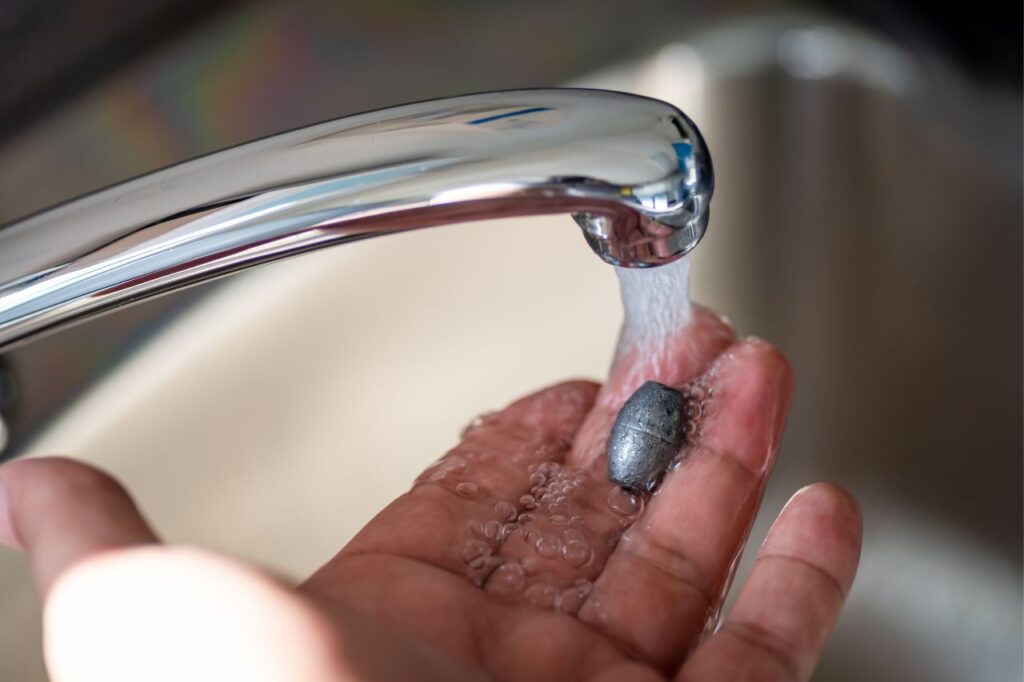
Preparing for a new baby comes with long lists. Testing the water at home is worth adding to yours, especially if you live in an older building or plan to make formula with tap water.
Why water matters more for babies. A formula-fed infant consumes far more water for their body weight than an adult does. If the water contains lead, a large share of the baby’s total exposure can come from it.
Which taps to test. Start with the tap you will use to prepare formula and the one used for drinking and cooking. If the bathroom faucet is used for filling bottles at night, include it too.
How the samples are taken. A first-draw sample, collected after water has sat in the pipes overnight, shows the highest level you are likely to see. A flushed sample, taken after the tap has run, shows what comes from further back in the system. Together they show whether the fixture or the plumbing behind it is the issue.
While you wait for results. Use cold water only for formula, run the tap until it feels noticeably colder if it has been sitting, and clean the faucet aerator. If you are worried, bottled water labeled for infants is a sensible short-term option.
Keep the report. A dated result is a baseline. If anything changes later, such as plumbing work or a new water heater, you will have something to compare against.